 We are living in times of change in the Americas and the world. In Venezuela, elections are urgently needed to carry out a transition of power, not one manipulated by a criminal group; in Bolivia, the restoration of the essential elements of democracy, which are currently nonexistent, is urgently needed; the end of the Cuban dictatorship, not its modernization, is an ongoing ultimatum; and the Nicaraguan regime can no longer be protected by its bourgeoisie.
The first Summit of the Americas in 1994 initiated the goal of full democracy. This initiative, proposed by President George W. Bush after he lost the election to Bill Clinton, was accepted and implemented in both content and personnel, giving rise to a bipartisan U.S. foreign policy toward Latin America.
To survive the defeat of capitalism’s triumph over communism, the only dictatorship in the Americas, Cuba, created the Sao Paulo Forum, advocating the "multiplication of axes of confrontation," regionalism, indigenism, sexism, generational clash, racism, and more.
With Hugo Chávez’s rise to the presidency of Venezuela in 1999, he immediately offered support to the Cuban dictatorship and became Castro’s capitalist partner, giving rise to "Castro-Chavismo." This facilitated the expansion of the Cuban dictatorship, and under the guise of anti-imperialism, they seized dictatorial control of Venezuela, Nicaragua, Bolivia, and Ecuador, establishing a structure of "narco-states."
- Hits: 297

 The most recent populist wave in Latin America, marked by Hugo Chávez’s anti-American, anti-globalization, and anti-neoliberal rhetoric, began in the early twenty-first century. From Venezuela, this discourse spread across Latin America, reshaping political competition in Mexico, Bolivia, Ecuador, Argentina, and Brazil.
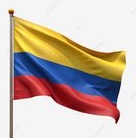 El ultimo dictador que padeció Colombia fue el general Gustavo Rojas Pinilla, uno de los pocos mandatarios en la historia que renuncio al poder, iniciándose así un proceso hacia la alternabilidad democrática que, a pesar de las imperfecciones, sitúa al país entre las naciones decanas, solo despues de Costa Rica, que efectúan elecciones generales periódicas, plurales y secretas.
 Aunque el Decálogo de Moises (los Diez Mandamientos) tiene su origen en el judaísmo y forma parte de la doctrina cristiana, sus Mandamientos se han transformado a través de los siglos en un referente de ética histórica. No cabe duda alguna de que es uno de los códigos de conducta más influyentes de la civilización occidental porque, al margen de la fe, ha servido como base jurídica y moral para estructurar sociedades diversas hasta desembocar en un consenso mundial que ha quedado recogido en documentos internacionales como la Declaración Universal de Derechos Humanos, entre muchos otros, incluyendo las obligaciones de proteger la vida, la propiedad y la veracidad.
 Código Hamurabi, un conjunto de leyes establecido por el rey de Babilonia en 1750 a.C. Se exhibe como un referente histórico. Igualmente cuando en Estados Unidos se exhiben los Diez Mandamientos en algún recinto jurídico o en los jardines anteriores a algún edificio, como puede ser un tribunal de distrito o incluso alguna escuela. Está ahí como un referente histórico que es pertinente en este país porque ha basado la ley y el orden en principios cristianos sin por eso discriminar en cuanto a las preferencias y prácticas religiosas diversas de sus ciudadanos.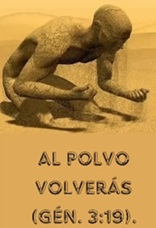
 La Cuaresma, en la fe católica, comienza el miércoles de ceniza, cuyo lema es polvo eres y en polvo te convertirás. Eso no impide que se le rinda homenaje al fallecido y se entierre sus restos como Dios manda. Hoy en día es muy popular cremar el cuerpo del fenecido tras los servicios funerarios. Y están los que donan sus cuerpos a la ciencia o los refrigeran esperando ser reanimados en un futuro.