 Is Donald Trump the lone character to blame for the attack on the Capitol on January 6, 2021? I wouldn’t be too surprised if a fair and transparent Congressional procedure proves that President Trump has made serious mistakes in his frantic attempts to overturn election results in those States where he claimed fraud had occurred.
These errors must be proven through due process in a Congressional Committee comprised of members chosen by both parties independently, and where both the prosecution and defense witnesses were cross-examined in accordance with fair rules for both parties.
In fact, so far in the one-sided proceedings, it appears that the Select Committee to Investigate the January 6th Attack hearings have presented powerful and compelling evidence that President Trump failed to act as he should have to curb his supporters and prevent further violence. Unfortunately, the Select Committee only has accusers among its members. They are all part of the prosecution. Absolutely no one in the defense role. Not even the two Republican Representatives handpicked by Speaker Nancy Pelosi against  the wishes of that party, which had previously selected five members to join the Committee but were vetoed by the Speaker. Nor has a single witness appeared to testify in favor of President Trump or to at least point to some mitigating circumstances. Is a fair trial possible in such circumstances?
- Hits: 3051
 A un año de las manifestaciones pacíficas del 11 y 12 de julio de 2021 se hace aún más urgente detenerse a tomar conciencia de lo que considero que es lo más importante de aquellos eventos, lo que más trasciende sus detalles o valoraciones: la voz del pueblo.
 But that is not the heart of America. Americans should look back at their founding as based on the principles of 1776—that uniquely great achievement for life, liberty, and the pursuit of happiness that was the Declaration of Independence. These were principles for all of humanity, though they would indeed take decades to fully implement for all Americans, both black and white. Their full achievement would lead to nothing less than a Civil War.
 A finales de los años 60, siendo estudiantes en el Tec. de Monterrey, dos amigos y yo alegremente nos dirigíamos a nuestra tierra a pasar las vacaciones de Navidad siguiendo en auto la ruta de siempre. De Monterrey a Laredo para luego tomar la carretera que, a través de Texas, Nuevo México y Arizona, bordeaba la línea divisoria entre los dos países hasta llegar a Nogales y penetrar Sonora.
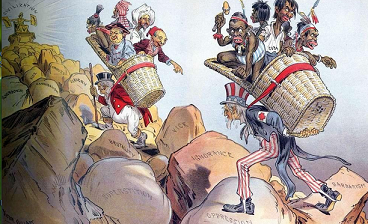 Sin embargo, el evento nos había causado una multitud de sentimientos encontrados ante este fenómeno desconocido para nosotros. Pero, sin abandonar nuestra actitud de tomar a broma algo que nos parecía despreciable, iniciamos los comentarios. ¿Cómo era posible que en el país más desarrollado del mundo todavía existiera algo tan vil? Pero el futuro nos mostraría situaciones aún más viles atentando contra todo lo que representaba para nosotros una sociedad libre, desarrollada, moral, que supuestamente había ya abandonado las cavernas. Continuando con la broma comentábamos que habíamos pasado “el corte”. Término usado por los ganaderos al referirse a los becerros que los compradores gringos desechaban por no cumplir con la calidad de exportación, y nos seguíamos riendo pues al no ser rechazados podíamos libremente pastar en estos potreros.