Democracia Participativa
Participatory Democracy
  • Noticias
    News
    • Headlines
    • Titulares
    • Cuba / Cuban Affairs
    • Venezuela / Venezuelan Affairs
    • Navegando / Browsing
  • Derechos
    H. Rights
    • Derechos Humanos / Human Rights
    • Perspectivas / Perspectives
    • Denuncias / Reports
    • Organizaciones / Campaigns
  • Economía
    Society
    • Toma nota.../Take note...
    • Perspectiva económica: Doug Casey
    • Perspectiva económica: Martínez-Solanas
    • Columnistas invitados/Guest columnists
    • Mundo Sindical / A Worker's World
  • Documentos
    Data & Referenda
    • DOCUMENTOS / DOCUMENTS
    • Documentos en Español
      • Instrumentos Internacionales y Declaraciones
      • Documentos sobre Derechos Humanos
      • Cuba: Iniciativas Democráticas
      • Documentos sobre Economía
      • Doctrina Social Cristiana
      • Otros documentos y perspectivas
      • Fundamentos / Basics
    • Documents in English
      • International Instruments & Declarations
      • Human Rights Documents
      • Documents on Economy
      • Other Documents
      • Christian Social Thought
    • Libros / Outstanding Books
    • Nosotros / About us
      Enlaces / Links
  • ELECCIONES
    Referenda
    • Elecciones / World Elections
    • Referendos / Plebiscites' articles
  • Foro
    Debate
    • Categorías / Forum categories
    • Mensajes / Recent Topics
    • Buscar / Search in Forum
Democracia Participativa
Participatory Democracy
  1. Home
  2. Economía
  3. Toma nota.../Take note...

Toma nota.../Take note...

The Great Reset: Imitating Chinese "Social Justice"?

Written by John Mac Ghlionn ** on 27 July 2021. Posted in Columnistas invitados / Guest columnists.

What are your thoughts on the Great Reset? Are you for it, or are you against it? On oneThe Great Reset side, there are those who view it as a force for good, a much-needed reboot for humanity. These people, most of whom lean left and probably enjoy The Guardian, see it as a way to tackle the dramatic effects of climate change and the gross effects of capitalism.
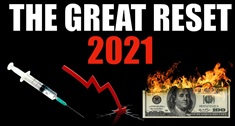
On the other side, we have outspoken critics. They view the Reset as an existential threat to mankind. It’s nothing but a shameless power grab. The puppet masters, they warn, seek to rob us of our agency. Who is right, and who is wrong?

Before going any further, though, it’s important to ask one important question: What is the Great Reset, anyway? The Washington Post would have us believe that democracy dies in darkness. In reality, though, it dies in Davos. Now, this line might sound cheap, even conspiratorial, but it’s not. Consider the following:

“Welcome to the year 2030. Welcome to my city—or should I say, ‘our city.’ I don’t own anything. I don’t own a car. I don’t own a house. I don’t own any appliances or any clothes. It might seem odd to you, but it makes perfect sense for us in this city. Everything you considered a product has now become a service.”

These are not lines from a George Orwell novel. No, they’re taken directly from an article written by Ida Auken, a World Economic Forum (WEF) contributor.

Read more …

  • Hits: 3113
Write comment (0 Comments)

Judaism’s Saddest Day

Written by Rabbi Ellen Bernstein ** on 24 July 2021. Posted in Columnistas invitados / Guest columnists.

People think me quite strange when I say that I love Tisha B’Av, the Jewish holiday which falls in the middle of summer when the days are long and the heat often unbearable. How could I love this holiday which is considered the saddest day of the Jewish year? Many people would opt to expunge this day from the holiday cycle altogether.

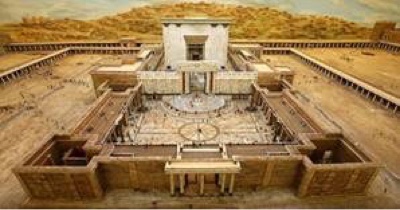
Tisha B’Av is a day of grieving, of destruction and loss—a mournful lament. Tisha b’Av, literally theReproduction of the Jewish Temple in times of Rome 9th of the month of Av, commemorates the great catastrophe, the destruction of the Jerusalem Temple, the center of the world for the Jewish people. There were two Temples in Jerusalem—each supposedly destroyed on the 9th of Av—hundreds of years apart.
Many people imagine the ancient Temple as a magnificent stone building, set in a stone courtyard, set in a stone plaza, set in a city of stone; and they think of Tisha B’Av as a remembrance of the destruction of this stone city. Their vision of the Temple may not extend beyond the human confines, beyond the building complex. However, the Temple in Jerusalem has always been associated with the Garden of Eden, the garden of earthy delight. My own understanding of the Temple comes from the prophet Ezekiel. He was one of many who saw in the Temple a representation of Eden. In Ezekiel’s vision, a river flowed out from under the Temple and gigantic trees grew along the banks of the river, and wherever the river flowed, fish were bountiful and the plants flourished, freely giving their foods and medicines. What better description of Paradise? The Temple and the Garden were then one and the same. The Temple is an icon of the Garden, and the Garden is an icon of the Earth.

The text we read on Tisha B’Av, Eica (Lamentations) is a montage of devastating and gruesome images of the suffering that comes to an entire people when the Temple and the city of Jerusalem go up in flames. As poetry, the language of Lamentations invites our minds to roam and make associations. When I hear the word Temple, my mind jumps to the Garden of Eden and then to the Earth, and the suffering that the Earth and all of us are facing as we are caught in the whirlwinds of our changing climate.

  • Israel
  • Jerusalem
  • Temple
  • Lamentations
  • God

Read more …

  • Hits: 3755
Write comment (0 Comments)

CUBA: Análisis de la explosión social ocurrida a partir del 11 de julio

Written by Dagoberto Valdés on 20 July 2021. Posted in Columnistas invitados / Guest columnists.

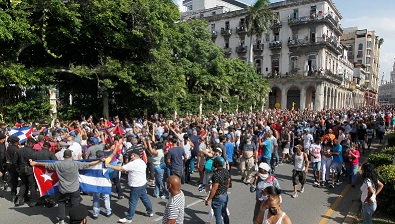
A una semana de la explosión social del 11 de julio 2021 sigue presente la preocupación y la reflexión sobre este hecho inédito e incomparable desde hace más de 60 años.

Compartiré mi visión sobre lo creo que pasó, lo que se terminó, lo que se demandó, lo que se respondió, lo que podemos aprender y lo que esperamos a partir de lo ocurrido y sus enseñanzas.

LO QUE PASÓ  

El 11J ocurrió una explosión social a lo largo de todo el país en sus 16 provincias. Fueron manifestaciones de diferente intensidad, tamaño y circunstancias. Tuvieron como antecedentes más próximos a San Isidro, el 27N, entre otros. Comenzaron en San Antonio de los Baños cerca de La Habana y, muy rápidamente, como un efecto dominó, se extendió en toda la geografía cubana. Comenzó y se mantuvo en la mayoría de los lugares, de forma pacífica y ordenada. Hubo varios eventos de vandalismo que son reprobables donde quiera que ocurran, y por los cuáles creo que no debemos generalizar ni calificar lo que ocurrió.

La situación cambió con el uso desmedido de la represión y la violencia entre cubanos, hijos de un mismo pueblo. Esto es condenable siempre. La violencia engendra violencia, como ocurrió el 11J. La manifestación pacífica es un derecho reconocido universalmente y también en nuestra Constitución en el artículo 56 que dice:

“ARTÍCULO 56. Los derechos de reunión, manifestación y asociación, con fines lícitos y pacíficos, se reconocen por el Estado siempre que se ejerzan con respeto al orden público y el acatamiento a las preceptivas establecidas en la ley.”

LO QUE SE TERMINÓ

Con las manifestaciones del 11J han caído algunos mitos relacionados con Cuba. Terminó el mito de que el pueblo cubano no podría vencer el miedo, que no podía ocurrir una explosión social pacífica, que Cuba no es España, ni Polonia, ni otros países. Verdad de Perogrullo que ocultaba una discriminatoria calificación del pueblo cubano como “distinto”, como “irremediablemente” sumiso. Otro mito que ha sido desmantelado es el de que los que disienten son unos “grupúsculos” insignificantes, que la unanimidad de la nación apoyaba, sin reservas, o por aplastante mayoría, al actual proyecto socio-económico y político.

  • Cuba
  • derechos humanos
  • comunismo
  • dictadura
  • democracia
  • participación

Read more …

  • Hits: 3781
Write comment (0 Comments)

Lessons from Titus Livius (Livy) on How Great Civilizations Rise and Fall

Written by Lawrence W. Reed on 12 July 2021. Posted in Columnistas invitados / Guest columnists.

We can still prevent history from repeating.

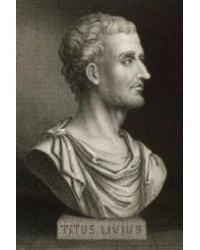
Titus LiviusTwo thousand years ago, an eminent Roman historian coined the popular aphorism, “Better late than never.” His name was Titus Livius, anglicized as simply Livy. True to the aphorism, he wrote much that deserves overdue attention today.

Livy’s life (roughly 59 BC to about 17 AD) spanned the most consequential period in the thousand-year history of ancient Rome. He witnessed the last decades of the crumbling old Republic and the rise in its place of the imperial autocracy we know as the Roman Empire. He was in his early twenties when the last great defender of the republican heritage, Cicero, was assassinated by a henchman of the tyrant Marc Antony. Livy observed the entirety of the reign of the first Emperor, Augustus. He is best known for his history of Rome, Ab Urbe Condita, described both in his day and in ours with such terms as “monumental” and “magisterial.”

What little we know of the man himself suggests he was somehow financially well-off, independent, and reclusive. He was schooled in rhetoric, philosophy, and history. He never served in any public position, though apparently, he personally knew Augustus. Writing his massive history of Rome absorbed his adult life.

Though Romans at the time of his writing held his work in high regard, we know that some parts of Livy’s historical accounts were surely based on minimal records, old and dubious oral stories, and even legend. After all, he wrote 2,000 years ago about people and events of as much as eight centuries before his time. “I hope my passion for Rome’s past has not impaired my judgment,” he opined in his introduction to Ab Urbe Condita, “for I do honestly believe that no country has ever been greater or purer than ours or richer in good citizens and noble deeds.”

Read more …

  • Hits: 3847
Write comment (0 Comments)

Our Increasingly Unrecognizable Civilization

Written by Mark Steyn ** on 16 June 2021. Posted in Columnistas invitados / Guest columnists.

The following text reflects the most significant segments of Mark Steyn speech on April 26, 2021 at a Hillsdale College National Leadership Seminar held in Franklin, Tennessee.

Mark Steyn... Look at just three things we have lost.
One is equality before the law, something absolutely essential to a free society. In its place, we now have politicized law. If a policeman fatally shoots someone, whether his name is released to the public depends on whether the shooting is consistent with the preferred narrative of the ruling class. A policeman recently took down a young woman who was threatening the life of another young woman with a knife, and that policeman was immediately identified—indeed, his photo was posted and he was threatened by NBA superstar LeBron James on Twitter. On the other hand, we know nothing of the policeman who shot dead an unarmed woman in the U.S. Capitol on January 6. His name will apparently never be released to the public.

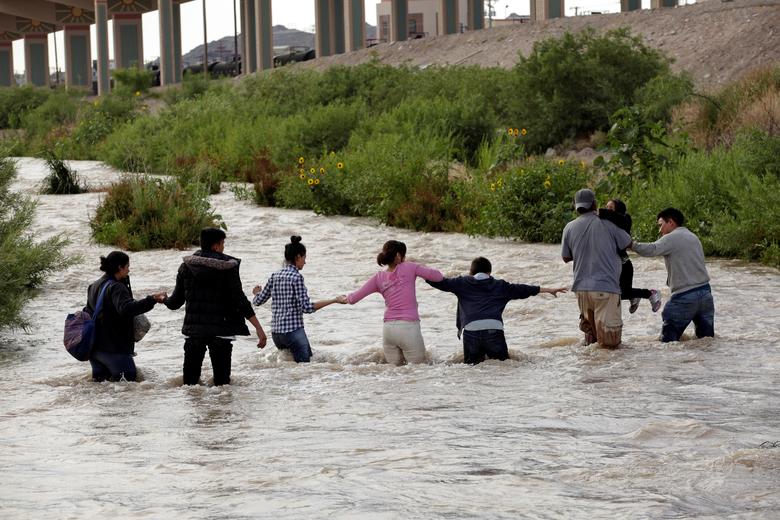
Second, border control. Functioning societies, at least since the Peace of Westphalia three centuries ago, have borders. America has no southern border and no plans to get one. The official position of our government seems to be that any of the seven billion persons on thisMigrans crossing the US southern border planet has a right to come and stay in the U.S. for three years, until his or her assigned court date comes up. As the number of people with pending cases continues to grow, that three years will extend out to five or seven or 15 years. If we get all seven billion people to come here, the court system will break down entirely and maybe we can go back to having a functioning border.

And third, dare I bring up the fact that it is a real question whether we can go back to agreeing to have open and honest elections? And if we don’t have open and honest elections, control of our borders, and equality before the law, then we don’t have the conditions for politics or free government.

  • Morocco
  • cocaine
  • coca
  • Rule of Law
  • Denmark
  • justicia social
  • Papa Francisco

Read more …

  • Hits: 5113
Write comment (0 Comments)

More Articles …

  1. Desde Cuba: Es el pueblo quien carga con todo
  2. FauciGate: el encubrimiento del virus de China
  3. ¿Cuándo es justo el veredicto de un tribunal?
  4. Limits of Federal Authority & the US Constitution
  5. Paul Samuelson
  6. Pedro Castillo: ¿Harakiri a la Peruana?
  7. The "For the People Act" (H.R.1) Power Grab must be defeated
  8. El control de la prensa y la estrategia de “cancelación” de las opiniones ajenas
  9. El Cacique Hatuey y los Hatueyes de hoy
  10. Participatory democracy is a call for more ‘people power’ in politics and across society
  11. El Estado de Derecho en Cuba
  12. Los Golpes de Estado: desde Napoleón Bonaparte hasta Joe Biden
  13. Origen del Día Internacional de la Mujer
  14. ¡PATRIA, VIDA Y LIBERTAD!

Subcategories

Perspectiva económica: Martínez-Solanas Article Count:  122

Perspectiva Económica: Elías Amor Article Count:  35

Perspectiva económica: Castañeda Article Count:  89

Columnistas invitados / Guest columnists Article Count:  1310

Mundo Sindical / A Worker's World Article Count:  227

Perspectiva Económica: Doug Casey Article Count:  6

Page 159 of 224

  • 154
  • 155
  • 156
  • 157
  • 158
  • 159
  • 160
  • 161
  • 162
  • 163
Partiendo del control de las organizaciones locales, de éstas al municipio, del municipio a las provincias y luego a toda la Nación, el hombre de pueblo, el trabajador, podrá ejercer efectivamente el papel de dirigente y lo hará en un régimen que, entonces sí, merecerá llamarse democrático.
Silvio Frondizi

Buscar / Search

Identificarse / Login

Identificarse / Login

  • Forgot your password?
  • Forgot your username?

Popular Economía / Most Read

  • Un Cero a la Izquierda
  • Retirarle fondos al Consejo de Derechos Humanos es un error monumental
  • ¿Premio Pulitzer a la desinformación?
  • ¿Qué es DOGE? ¿Cómo funciona? ¿Quién lo dirige?
  • Money, money, money – The US' new political approach

Documentos Economía / Random Economy Docs

  • Human Development Report 2020
  • Towards Reforming the International Financial and Monetary Systems in the context of Global Public Authority
  • El Indicador de Progreso Genuino y el Índice de Desarrollo Humano
  • Creating Good and not just Goods

Hacer una donación
/ Donate now

  • Consulta popular en plebiscito

    [

  • Cuba: Libertad y Responsabilidad. Desafíos y Proyectos

    El autor de esta magna obra sobre la realidad cubana es Dagoberto Valdés Hernández, un Ingeniero Agrónomo de profesión, educador de vocación y dirigente católico de alma. Desde su Provincia de Pinar del Río, en Cuba, ha dirigido con firmeza y serenidad la Revista Vitral, con una notable capacidad...

  • Edificando la Democracia Participativa

    Edificando la Democracia Participativa Gerardo E. Martínez-Solanas Una de las razones fundamentales para promover la democracia participativa consiste en que tal sistema ofrece al ciudadano una capacidad de participar en decisiones orientadas a desarrollar una economía socialmente justa y...

  • Audiencia Nacional española desata crisis diplomática con China

    Dictó una orden de busca y captura contra cinco miembros de la nomenclatura china por delitos de lesa humanidad y genocidio contra el pueblo tibetano Exteriores alega que la división de poderes le impide influir en los jueces El expresidente Jiang Zemin y el exprimer ministro Li Peng (ambos en la...

  • Los malos usos de la Historia

    Una guerra dinástica, típica del Antiguo Régimen, no se puede explicar como un conflicto nacional entre España y Cataluña.Tampoco la unión de reinos bajo los Reyes Católicos fue el nacimiento de una nación Puede que alguien que no haya dedicado mucho tiempo a pensar sobre estas cosas crea que la...

Facebook
© 2003 - 2025 Participatory Democracy Cultural Initiative, Inc.
  • Noticias
    News
    • Headlines
    • Titulares
    • Cuba / Cuban Affairs
    • Venezuela / Venezuelan Affairs
    • Navegando / Browsing
  • Derechos
    H. Rights
    • Derechos Humanos / Human Rights
    • Perspectivas / Perspectives
    • Denuncias / Reports
    • Organizaciones / Campaigns
  • Economía
    Society
    • Toma nota.../Take note...
    • Perspectiva económica: Doug Casey
    • Perspectiva económica: Martínez-Solanas
    • Columnistas invitados/Guest columnists
    • Mundo Sindical / A Worker's World
  • Documentos
    Data & Referenda
    • DOCUMENTOS / DOCUMENTS
    • Documentos en Español
      • Instrumentos Internacionales y Declaraciones
      • Documentos sobre Derechos Humanos
      • Cuba: Iniciativas Democráticas
      • Documentos sobre Economía
      • Doctrina Social Cristiana
      • Otros documentos y perspectivas
      • Fundamentos / Basics
    • Documents in English
      • International Instruments & Declarations
      • Human Rights Documents
      • Documents on Economy
      • Other Documents
      • Christian Social Thought
    • Libros / Outstanding Books
    • Nosotros / About us
      Enlaces / Links
  • ELECCIONES
    Referenda
    • Elecciones / World Elections
    • Referendos / Plebiscites' articles
  • Foro
    Debate
    • Categorías / Forum categories
    • Mensajes / Recent Topics
    • Buscar / Search in Forum