Written by The Epoch Times on .
Posted in Headlines.
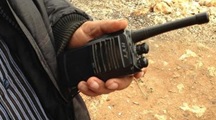
A Hezbollah official says walkie-talkies used by the group exploded across Beirut, a day after pagers blew up on Tuesday.
Beirut, Sept.18.– In a second day of exploding devices, handheld radios used by Hezbollah detonated late on the afternoon of Sept. 18 across southern Lebanon and in Beirut’s southern suburbs, a security source and a witness told Reuters.
Lebanon’s Health Ministry says at least nine people were killed and 300 were injured by the second wave of explosions.
Written by Democracia Participativa on .
Posted in Headlines.
Vilnius. Sept. 5.– The Council of Europe Ministers of Justice will meet at the Palace of the Grand Dukes of Lithuania for an informal conference entitled “Towards accountability for international crimes committed in Ukraine”, which is being held under the Lithuanian Presidency of the organisation’s Committee of Ministers.
The ministers will consider how the Council of Europe and its member states can enhance their support of the Ukrainian justice system and help provide an international response to the aggression by the Russian Federation and its consequences.
The conference will be hosted by the Minister of Justice of Lithuania, Ewelina Dobrowolska. The Secretary General of the Council of Europe, Marija Pejčinović Burić, the President of the Parliamentary Assembly of the Council of Europe, Theodoros Rousopoulos, the Commissioner for Human Rights of the Council of Europe, Michael O’Flaherty, and the European Union Commissioner for Justice, Didier Reynders, will participate in the conference.
Zelensky reiterated that the Ukrainian incursion into Kursk is an aspect of Ukraine's "victory plan" to end the war on just terms and bring Russia to the negotiating table. The Russian military command was redeploying forces from northern Kharkiv Oblast, the Kupyansk-Svatove-Kreminna line, and western Zaporizhia Oblast to Kursk Oblast and recently observed indications that the Russian military command is redeploying forces likely intended for future higher priority offensive operations in the Pokrovsk direction to Kursk Oblast.– Institute for the Study of War
KYIV, Sept.4 (Reuters).–President Volodymyr Zelenskiy said on Wednesday that Ukraine needed "new energy", as he ordered a major government reshuffle at a crucial juncture in the war against Russia.
A total of six ministers, including Foreign Minister Dmytro Kuleba, submitted their resignation and parliament accepted the resignations of four.
They included the resignations of a deputy prime minister in charge of European integration, the strategic industries minister overseeing Ukraine's arms production and two other ministers, the lawmakers said.

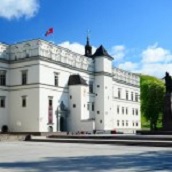 accountability for international crimes committed in Ukraine”, which is being held under the Lithuanian Presidency of the organisation’s Committee of Ministers.