Governments, particularly in the United States, are bragging that inflation is declining. How they measure it is the issue. The Consumer Price Index (CPI) is a measure of the average change over time in the prices paid by urban consumers for a market basket of tens of thousands of consumer goods and services. The most upbeat data we are seeing, however, refers to a Core Inflation Index that includes many consumer products and services but excludes those from the food and energy sectors. The final rate is therefore substantially lower than the CPI because the inflation rate was 10.1% in the food sector and 8.7% in the energy sector during the 12 months ending in Jan. 2023. Thus, the real impact of inflation on the underprivileged and lower middle class is concealed.
Why inflation will be hard to bring down
(The Economist).– Financial markets are floating high on optimism. Investors are increasingly betting that inflation, the world economy’s biggest problem, will fall away without much fuss. America’s S&P 500 index has been buoyant this year, European shares even more so, and money has poured into emerging economies. But what if investors are wrong to be so cheery? (...) the battle with inflation is far from over. Six of the big, rich G7 countries enjoy an unemployment rate at or close to the lowest seen this century. It is hard to see how underlying inflation can dissipate while labour markets stay so tight (...) it would be a problem for central bankers, who are judged against their targets. And it would blow a hole in investors’ optimistic vision.
Inflation will be harder to bring down than markets think
Investors are betting on good times. The likelier prospect is turbulence.
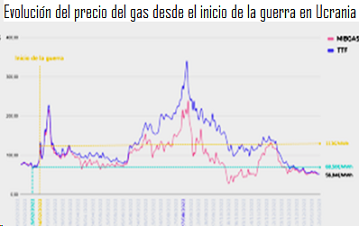
La guerra entre Rusia y Ucrania está en boca de todos, pero muchos no saben sobre la guerra del gas que está teniendo lugar y en la que Europa también está involucrada. A un año del inicio del conflicto bélico los precios del gas en Europa se encuentran a niveles más bajos que incluso antes de la guerra, lo cual da indicios de que Europa está tomando la delantera.
El futuro del precio del gas en el mercado es incierto y este artículo explica tanto la subida como la bajada de los precios del gas durante la guerra y los motivos por los que el gas se encuentra a estos niveles en la actualidad.
Precio del gas en Europa: Más bajo que antes de la guerra de Ucrania.
Feb.15 (DP.net/Papernest.com).– Si bien la guerra en Ucrania no se trata de la gestión directa del gas, su vínculo es innegable. El precio del gas es uno de los muchos efectos que este conflicto bélico está teniendo en la sociedad, y si bien era de esperar que este se elevara, la realidad de hoy insinúa que Europa pudo revertir la situación y tomar la delantera en la “guerra del gas” contra Rusia.
Rusia es uno de los principales exportadores de gas natural del mundo, más precisamente el 41% del gas natural requerido por la Unión Europea proviene de allí, lo que equivale a unos 160 mil millones de metros cúbicos. Si bien España particularmente no es tan vulnerable, ya que solo el 10% del gas que se consume en el país procede de Rusia, otros países europeos dependen casi por completo de él y ellos sí influyen directamente en el precio del gas del mercado Español.
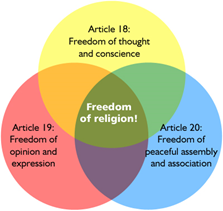
Freedom of worship is what you do within the four walls of the church, the synagogue, or the mosque. Freedom of religion is what you do outside the four walls of the church, the synagogue, or the mosque. It includes worship but also the right of believers to evangelize, change their religion, have schools and charitable institutions, and participate in the public square without having to hide their beliefs.
Freedom of Religion on the Chopping Block
by Wesley J. Smith
Intolerant secularism is on the march. In a blatant campaign of cultural imperialism, secularists and their leftist allies aim to shrivel the “free exercise” of religion to mere “freedom of worship.”
Freedom of religion and worship aren’t the same concepts. Indeed, free exercise was ably described by the late Supreme Court Justice Frank Murphy as having “a double aspect—freedom of thought and action.” In other words, we are not merely free to believe, but (generally speaking) to also act in the public square according to our faith precepts.
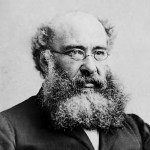
The English were proud of their nation's commercial successes but also worried that they lived in a plutocracy —a country where wealth and power rule— because of those successes. The ambivalence of this attitude is captured in Trollope's novels, which highlight the culture's propensity to both worship and abuse the various forms of wealth that emerged as England's economic dominance shifted from land and production to banking and sales, while also highlighting all the good things that money enables people to do and acquire.
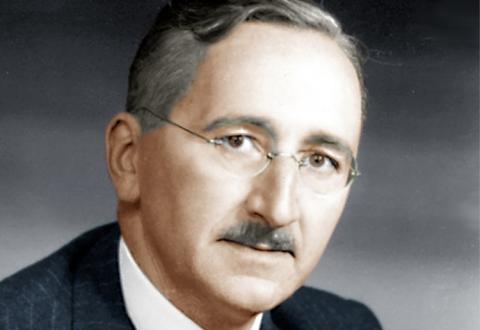
According to Friedrich Hayek, if only governmental restrictions were abolished, the free market would offer the ideal number (and diversity!) of financial products. Competition in the "fiat money sector" would result in currencies that were incomparably better than those produced by the government, just as competition in other industries leads to low pricing and high-quality products.
Here, Roger Kimball presents his own contentious viewpoints on the matter.
Lessons From Anthony Trollope and Friedrich Hayek on Money
by Roger Kimball
When it comes to money, most politicians are curiously divided in their minds.
On the one hand, they aren’t averse to spending gobs and gobs of it—millions, billions, and trillions.
Just think of the obscene $1.7 trillion spending bill that’s just about to come down on your children, their children, yea, even unto the seventh son.
People used to say that Republicans were the party of fiscal restraint. But, how many just voted for this orgy of fiscal incontinence, larded as it was with “earmarks,” a euphemism for pork.
There’s always more, our masters seem to think, where the last batch of fantasy money came from.
El 26 de mayo de 1997 se estableció, sobre la base de la letra c) del apartado 2 del artículo K.3 del Tratado de la Unión Europea, el Convenio relativo a la lucha contra los actos de corrupción en los que estén implicados funcionarios de las Comunidades Europeas o de los Estados miembros de la Unión Europea [Diario Oficial C 195 de 25.6.1997]. El Convenio está destinado a luchar contra la corrupción en la que estén implicados funcionarios europeos * o funcionarios nacionales * de los Estados miembros de la Unión Europea (UE). Rusia se aísla así de los convenios e instrumentos inter-nacionales que la vinculaban con el resto de Europa.
Rusia se retira de convenio europeo contra la corrupción
Moscú, Ene.9 (AP).– Rusia se retiró de un convenio europeo contra la corrupción, luego de salirse del Consejo de Europa debido a sus acciones en Ucrania.
El presidente ruso Vladimir Putin pidió a la cámara baja del Parlamento, la Duma Estatal, que pusiera fin a la adhesión al convenio del Consejo Europeo sobre la lucha contra la corrupción que Rusia firmó en 1999. Aún no se ha fijado la fecha de la votación, pero se espera que sea pronto.
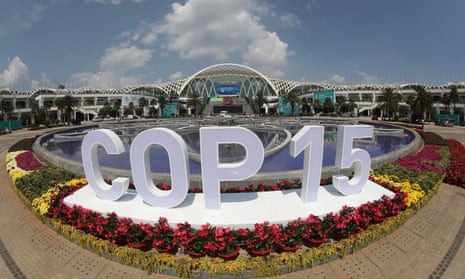
También conocida como la Conferencia de las Naciones Unidas sobre Biodiversidad, la COP15 es la decimoquinta reunión de las Partes del Convenio sobre la Diversidad Biológica (CDB) que establece 21 objetivos y 10 hitos que los gobiernos deben cumplir a más tardar en 2030. Estos incluyen proteger un mínimo del 30% de los océanos y la tierra del mundo, reducir el uso de pesticidas en al menos dos tercios, eliminar los desechos plásticos y aumentar los recursos financieros dedicados a la biodiversidad a, por lo menos, US $ 200 mil millones anuales.
En la cimera sobre la biodiversidad en Montreal, Canadá, los países participantes han pactado que en 2030 haya, al menos, el 30% de las zonas terrestres, marina y de lagos protegidas.
Es un gran paso para conservar la biodiversidad del planeta. Nunca antes la biodiversidad había estado en un lugar tan alto en la política mundial. El camino no ha sido fácil ya que la última conferencia de biodiversidad fue celebrada hace 4 años y en motivo del Covid-19 se ha ido aplazando. En principio tenía que celebrarse en China que es quien tiene la presidencia de la conferencia, pero al final ha tenido una co-presidencia junto al Canadá por la política de Covid 0 en el gigante asiático.
El acuerdo ha llegado a última hora antes de que terminara la conferencia, los acuerdos in extremis ya empiezan a ser un clásico como ya vimos en la COP 27 de éste mismo año. En el que a pesar de grandes conflictos como la Guerra de Rusia y Ucrania o la crisis energética que vive Europa con la subida del precio de la luz y del gas que las compañías de la luz repercuten en los consumidores hace que sea difícil llegar a acuerdos multilaterales.
 Freedom of worship is what you do within the four walls of the church, the synagogue, or the mosque. Freedom of religion is what you do outside the four walls of the church, the synagogue, or the mosque. It includes worship but also the right of believers to evangelize, change their religion, have schools and charitable institutions, and participate in the public square without having to hide their beliefs.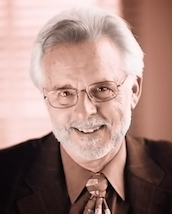
 El acuerdo ha llegado a última hora antes de que terminara la conferencia, los acuerdos in extremis ya empiezan a ser un clásico como ya vimos en la COP 27 de éste mismo año. En el que a pesar de grandes conflictos como la Guerra de Rusia y Ucrania o la crisis energética que vive Europa con la subida del precio de la luz y del gas que las compañías de la luz repercuten en los consumidores hace que sea difícil llegar a acuerdos multilaterales.