 The Organization of American States (OAS), the most important regional organization created with the objective “to be a political forum for peace-keeping, security, and the promotion and defense of democracy and human rights,” is now confronted with an existential crisis of either fulfilling its objectives and principles in defense of democracy and human rights, or disappear.
The OAS was created on 30 April of 1948 with “the essential objectives of strengthening the continent’s peace and security, promote, and consolidate democracy, promote human rights, back social and economic development favoring sustainable growth in America.” On 11 September of 2001, it approved the Interamerican Democratic Charter establishing that “peoples in the Americas have the right to democracy and their governments have the obligation of promoting and defending it. Democracy is essential for the social, political, and economic development of the peoples from the Americas.”
The first Americas’ Summit of 1994 hailed the start of a period of OAS’s optimism and efficiency that culminated with the signing of the Interamerican Democratic Charter on 11 September 2001, the same day the U.S. was attacked by terrorists inside its territory. In the 1990s, all governments in the Americas were democratic, except Cuba, whose regime was agonizing in its “special period.”
- Hits: 555

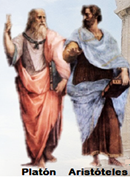 La palabra política tiene su origen en el término griego politeia, empleado fundamentalmente por Platón y Aristóteles y que deriva, a su vez, de la palabra polis que significa ciudad-Estado. Guarda relación, además, con los derechos de los ciudadanos y con la forma de gobierno.
 Muchos cónclaves han sorprendido al mundo y a la Iglesia, como el que eligió al Cardenal Angelo Giuseppe Roncalli (Juan XXIII). Otros no tanto; a ningún vaticanista sorprendió que eligiesen al Cardenal Eugenio Pacelli (Pío XII) o al Cardenal Giovanni Montini (Pablo VI).
 Cuando mencionamos la palabra, historia, de inmediato surgen una serie de frases para darle significado entre los cuales, una de las más completas es la de Santayana: “aquellos que no recuerdan la historia, están condenados a repetirla.” Pero, si lo enfrentamos con una de Churchill: “La historia siempre es escrita por los vencedores.” Nos provoca una indecisión para establecer posturas y, hacer lo más importante, analizarla con profundidad para, con los Aces en nuestro poder, tomarla como una verdadera guía para no seguir engañados como las grandes mayorías.