The way of civilization is paved with the recumbent gravestones of dead religions. How is it, then, that Marxism, which meets most if not all of the qualifications necessary for religious designation, survives after nearly two centuries of false prophecies, failures, and a history of enormous atrocities? Two years ago, as the editor of Chronicles: A Magazine of Culture, I published a brilliant essay by the late 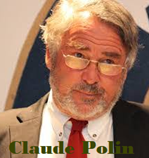 Claude Polin, Emeritus Professor of Political Philosophy from the Sorbonne, that tackles this difficult question (“Marxism: Why the Liberal West Can’t Avoid It,” June 2018).
Polin begins by observing that no one doubts that Marxism has passed its zenith and is destined for the oft-invoked dustbin of history. And yet, he adds, Marxism has clearly not been “erased” from the Western mind. “It is not,” he writes, “so much that a few communist parties linger here and there; it is, much more decisively, that Marxism has not stopped hovering over significant parts of our intelligentsia and our Western youth, who seem rather fascinated by the Marxist rhetoric, not to mention the surprising number who regret Stalinism.” “Marxism” was Claude’s last published article; he died at his home in Paris two months after it appeared in print and before he could complete a complementary essay on the indispensability of Christianity and Christian thought to Western society, and a year and a half before the events of the first seven months of 2020 proved his thesis so spectacularly right.
Polin finds it strange that while regimes inspired by Marxist theories have been many times condemned, Marxist doctrine itself, like Marx himself, has never been “indicted.” Why, he asks, should that be so? Why has Marxism imprinted Western thought to the extent that it has? And why has communism never been put on public trial, as National Socialism was immediately after the defeat of the Third Reich? “Whatever the reason for Marxism’s survival, it is the reason for that reason that must be discovered….”
- Hits: 4314
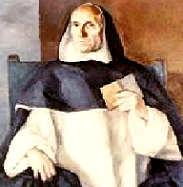 Nace entre 1480 y 1486 en Burgos o Vitoria. Murió en 1546. Ingresa a la Orden de los Dominicos y se forma en París donde obtiene su doctorado en la Sorbona.
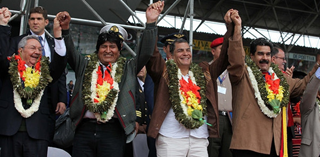 bolivianas avanzan con plomo en el ala en su afán de devolverle la institucionalidad democrática al país.
 Cuba, El Salvador. ¿Será verdad?
 El pueblo boliviano es víctima de una crisis política, social y económica, que agravada por el coronavirus lo lleva a la confrontación, a la miseria y al retorno del dictador. Renunció el dictador Evo Morales pero la dictadura sigue detentando el poder por medio de la estructura jurídico constitucional que impuso por la fuerza y que le garantiza impunidad y autoridad sin responsabilidad. En Bolivia salió el dictador pero no la dictadura y no hay transición ni democracia. Para terminar la dictadura y recuperar la democracia hay que retornar al “estado de derecho” con la Republica de Bolivia.