The following text reflects the most significant segments of Mark Steyn speech on April 26, 2021 at a Hillsdale College National Leadership Seminar held in Franklin, Tennessee.
 ... Look at just three things we have lost.
One is equality before the law, something absolutely essential to a free society. In its place, we now have politicized law. If a policeman fatally shoots someone, whether his name is released to the public depends on whether the shooting is consistent with the preferred narrative of the ruling class. A policeman recently took down a young woman who was threatening the life of another young woman with a knife, and that policeman was immediately identified—indeed, his photo was posted and he was threatened by NBA superstar LeBron James on Twitter. On the other hand, we know nothing of the policeman who shot dead an unarmed woman in the U.S. Capitol on January 6. His name will apparently never be released to the public.
Second, border control. Functioning societies, at least since the Peace of Westphalia three centuries ago, have borders. America has no southern border and no plans to get one. The official position of our government seems to be that any of the seven billion persons on this planet has a right to come and stay in the U.S. for three years, until his or her assigned court date comes up. As the number of people with pending cases continues to grow, that three years will extend out to five or seven or 15 years. If we get all seven billion people to come here, the court system will break down entirely and maybe we can go back to having a functioning border.
And third, dare I bring up the fact that it is a real question whether we can go back to agreeing to have open and honest elections? And if we don’t have open and honest elections, control of our borders, and equality before the law, then we don’t have the conditions for politics or free government.
- Hits: 5518
 Los últimos tiempos en Cuba nos hacen recordar aquellas palabras de Jesús a los fariseos: “Atan cargas pesadas y difíciles de llevar, y las ponen sobre las espaldas de los hombres” (Mateo 23,4). No se trata de esta pandemia, ni de la otra. No se trata de esta medida, ni del reordenamiento. No se trata de una ideología de género o de cualquier otra. Se trata, como dice el pueblo, de todo “esto”. De la “cosa”. Ya la gente dice en las calles sin mucho miedo: ¡Qué malo se ha puesto “esto”! ¡Qué fea está la “cosa”! Y la gente tiene razón.
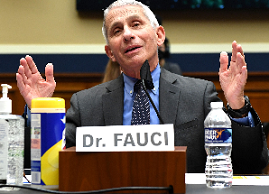 El meticuloso camino de Fauci para evitar cualquier información que pudiera vincular concretamente al Instituto de Virología de Wuhan (WIV) da crédito a su esfuerzo calibrado por ocultar el papel de Pekín en este crimen contra la humanidad
 Entre los derechos más importantes que integran la Constitución de Estados Unidos figura el derecho a tener un juicio amparado por todas las garantías procesales (fair trial) cuando el acusado tiene que enfrentar cargos ante un tribunal. Esto implica que el acusado sea considerado inocente hasta que se le prueba la culpabilidad "sin lugar a dudas". Por eso, en los casos criminales, se le exige al jurado unanimidad, ya sea para declarar "culpable" o "inocente" al acusado. Cuando no se logra la unanimidad del jurado en un caso criminal, el juicio se anula y, en la mayoría de los casos, debe convocarse a otro juicio con nuevos jurados. En algunas localidades se permite que el jurado presente una lista de preguntas para que se les dé respuesta en una audiencia posterior y puedan así llegar a un veredicto antes de declarar el juicio nulo si todavía no logran la unanimidad.
 been the target of a propaganda campaign for many decades.