
 Technology—all technologies—inevitably become better and cheaper over time. That trend has been in motion, at an accelerating rate, since at least the end of the last Ice Age about 12,000 years ago. Since the start of the Industrial Revolution about 200 years ago the hyperbolic curve has gone vertical.
Why, therefore, has DeepSeek surprised everybody? Its arrival is part of a very established and obvious trend. I’m just amused by the ironic fact that no existing AIs seem to have predicted it.
That being the case, somebody, or AI itself for all we know, has already come up with something even better than DeepSeek. That’s inevitable. "They" say that AI will soon be vastly smarter, and arguably wiser, than humans. If so, maybe it will be kinder and gentler too. Unless its programmers have bad intentions—which is quite likely.
I’m not a computer nerd—far from it—but I am a technophile. Looking at the history of technology, starting with Heraclitus, Leonardo, Edison, the Wright Brothers, Steve Jobs, and thousands of others, almost all of the great breakthroughs in history have been made by individual geniuses working on their own or with small groups. Getting the government involved would almost certainly be a gigantic mistake.
- Hits: 444
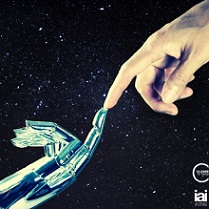
 Helsinki, Feb.5 (DPnet).
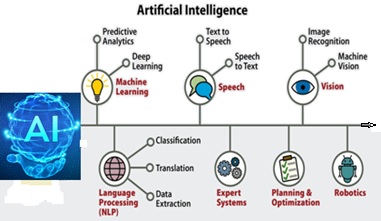 is organized in the framework of the CoE-EU Technical Support project “Upholding equality and non-discrimination by equality bodies regarding the use of artificial intelligence (AI) in public administrations”, co-funded by the European Union. This European Union–Council of Europe Technical Support project will extend up to 2025 and is expected to strengthen the administrative capacity of the equality bodies with Belgium, Portugal, and Finland as the main beneficiaries.

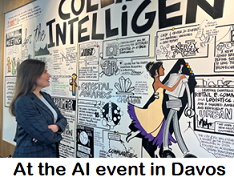 It’s no surprise, then, that artificial intelligence dominated the space this year, given the boom in this technology. This has propelled firms to capitalize on AI interest—especially from businesses. A poll from consultancy Accenture out on Monday revealed that 58% of executives expect generative AI solutions to be adopted at scale within the organization in 2025.
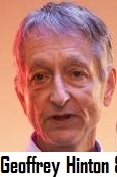 Tiene 76 años y le acaban de otorgar el Nobel de Física. Lo llaman "el padrino de la inteligencia artificial" porque sin su visionario trabajo no existirían ni ChatGPT ni los otros chatbots que están revolucionando el mundo. Un genio entre genios. Durante más de diez años, Hinton solo podía estar de pie o tumbado por un problema en la espalda. Ahora, tras una cirugía, vuelve a sentarse y a viajar en avión. Pertenece a una familia de genios académicos; entre ellos, su tatarabuelo, el matemático George Boole, quien inspiró el código binario que hoy rige todos los ordenadores. Ahora, sin embargo, Hinton ha dejado Silicon Valley para advertirnos: «estamos creando un monstruo que amenaza la humanidad». Nos explica por qué.