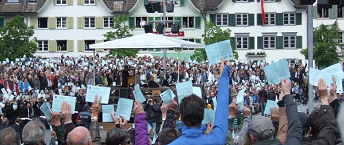
Tunis, May 27.─ The Tunis Declaration, published at the end of the 5th Global Forum on Modern Direct Democracy held from May 14 to 17 in Tunis, calls for the establishment in Tunisia of decentralisation of power through the promotion of participatory democracy.
The latter requires a supportive infrastructure - free people and secure spaces (especially online) and independent citizen media and strong social movements and economic resources and civil society organisations--, the Declaration indicates, while stressing the need to accelerate the organisation of municipal elections, the establishment of local power, fight against corruption and promotion of transparency.
President of the Forum, Bruno Kaufmann said participatory democracy means equality and leadership for all, especially for youth and women.
- Hits: 13274
 ushering in the first meeting between the heads of state