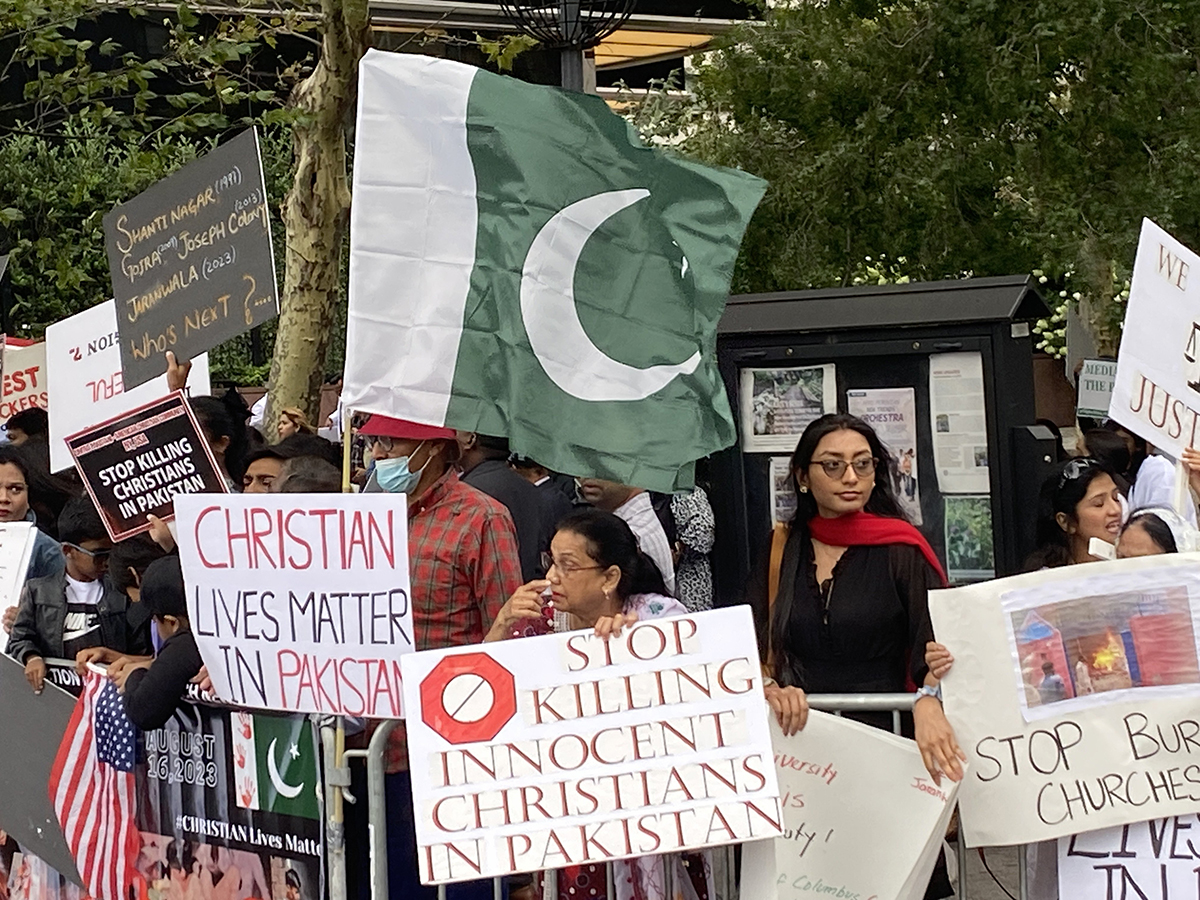
 Jan.10 (DPnet).– Pakistan is home to about 4 million Christians, 2.5 Protestant, 1.3 Catholic, and 0.2 other Christian communities. The Constitution of Pakistan, as well as other laws, place restrictions on religious freedom. Laws against blasphemy subject individuals to death sentences for “defiling Prophet Muhammad,” to life imprisonment for “defiling, damaging, or desecrating the Quran,” as well as to prison sentences for “insulting another’s religious feelings.”
Christians, including Catholics, face significant persecution in Pakistan due to religiously motivated violence, discrimination, and the misuse of strict blasphemy laws. This persecution results in targeted attacks on churches, forced conversions —especially of women and girls— societal marginalization, and pervasive fear. These issues are exacerbated by religious extremism and vigilante justice, leaving Christians as vulnerable minorities despite existing constitutional protections. 
Organizations like the Center for the Study of Organized Hate (CSOH) or the Commission on International Religious Freedom (USCIRF) have repeatedly designated Pakistan as a "Country of Particular Concern" (CPC) due to its severe religious freedom violations, including those affecting Christians.
Forms of Persecution:
Individuals from religious minority groups face pervasive discrimination and sustained persecution for their beliefs. They are frequently accused of blasphemy based on the country’s infamous blasphemy laws, which are now often enforced in tandem with the Prevention of Electronic Crimes Act (PECA) that empowers the state to exert comprehensive control over social media. According to the "2023 Report on International Religious Freedom, issued by the US Dept. of State, «police at times killed or physically abused members of religious minorities or failed to protect individuals from violence linked to religion. Frequently, police accused of abuses were lightly sanctioned or not punished at all. In one case, police failed to protect a detainee facing blasphemy charges in Punjab’s Nankana Sahib district; a mob stormed a police station and lynched him on February 11.»
 Members of the Christian, Hindu, Sikh, Shia, Ahmadi, and Kalash communities in Pakistan endure severe systemic discrimination and relentless harassment. They are frequently victims of fabricated blasphemy allegations that lead to mob violence, lynchings, and targeted killings. Many face forced conversions, arbitrary detention, and the devastating destruction of their properties, including places of worship and cemeteries. This alarming trend not only undermines their basic human rights but also threatens the very fabric of a diverse and pluralistic society.
- Blasphemy Laws: Widely used, these laws can lead to accusations (often false) against Christians, resulting in mob violence, lengthy imprisonment, and even death sentences, even without concrete proof.
- Forced Conversions & Marriages: Christian girls and women are frequently abducted, forcibly converted to Islam, and coerced into marriage with Muslim men.
- Targeted Violence: Churches, schools, and Christian communities have been bombed and attacked by extremist groups, leading to mass casualties.
- Social Discrimination: Christians often face systemic discrimination in employment, education, and housing, relegated to menial jobs like sanitation.
- Land Grabbing: Minorities are vulnerable to powerful individuals seizing their land and property.
Many Christian institutions serve the underprivileged in Pakistan, including working for social justice and serving other religious minorities. Though it is not their primary purpose, these organizations function to raise Christian visibility and political capital. For example, it is the National Commission for Justice and Peace, a Catholic organization, that most frequently raises awareness of Hindu discrimination and caste violence in the media. Such services build trust between minority communities so they can mobilize support to face common challenges together.
Comments powered by CComment