- A cultural genocide is under way. What’s behind China’s language of “unity,” “harmony,” and “progress”?
 The Chinese Communist Party (CCP) has enacted a genocidal new law, the so-called “Ethnic Unity and Progress Law”—deceptively titled to hide its insidious intentions. It aims to end Tibetan language learning, divide Tibetan families and intimidate people who speak out abroad.
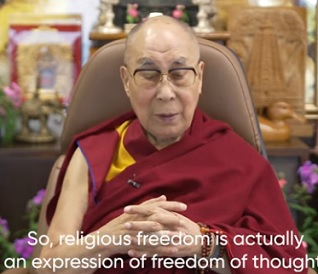
Speaking on the importance of human values, the Dalai Lama emphasized that every individual deserves equal respect regardless of ethnicity, religion, language, or cultural background. He urged the Chinese authorities to adopt policies that promote harmony through dialogue rather than restrictions, saying that genuine unity cannot be built without protecting fundamental human rights. The Nobel Peace Prize laureate reiterated his long-standing commitment to non-violence and peaceful engagement. He said that understanding and cooperation among different communities are essential for creating a stable and prosperous society. According to him, respect for human dignity should remain the foundation of governance in every nation.
Despite his willingness to engage in dialogue and negotiation, the Chinese government is developing a dangerous campaign designed to forcefully apply this Law to impose a state-controlled identity on Tibetans—and effectively force Tibetans to conform to a state-defined identity.
But we at DemocraciaParticipativa.net are pushing back for Tibetans’ rights in support of the International Campaign for Tibet (ICT), and we strongly urge anyone who cherishes democracy to publicize and spread these reports regarding the constant human rights violations committed by the Chinese authorities, and contribute your own generous support to the Tibetan cause.
 With the support of democracy advocates like you, the International Campaign for Tibet (ICT) conducted thorough research and expert analysis of all 65 provisions of the “Ethnic Unity and Progress Law”—and uncovered an alarming strategy behind China’s plans to forcibly assimilate Tibetans and all other non-Chinese peoples into a unified Chinese identity shaped by the Chinese Communist Party (CCP) ideology.
It makes Mandarin Chinese the only language of instruction for Tibetan youth; compels parents under threat of dire consequences to guide their children to love the CCP; and asserts that Beijing has the power to target anyone abroad who “undermines ethnic unity”—extending the threat of legal action to Tibet defenders anywhere in the world, even beyond China’s borders.
ICT built advocacy successes like a bipartisan group of U.S. Congressional leaders condemning China’s law the day it was enacted, a resolution in the European Parliament urging its repeal, and lawmakers from Canada to Australia taking action to voice their condemnation of this law. However, that is not enough to counter and halt the cultural genocide and other human rights violations and abuses against the Tibetan people. More resources and firm actions, such as sanctions, and responsible support of all the world’s democratic governments are needed.