| The Freedom Accord before the European Parliament is a comprehensive transition framework developed by Cuban civil society leaders and democratic opposition figures. It establishes a roadmap for Cuba's path from dictatorship to democracy, encompassing political, economic, and social reconstruction, with a commitment to free, fair, and multi-party elections as its final stage. |
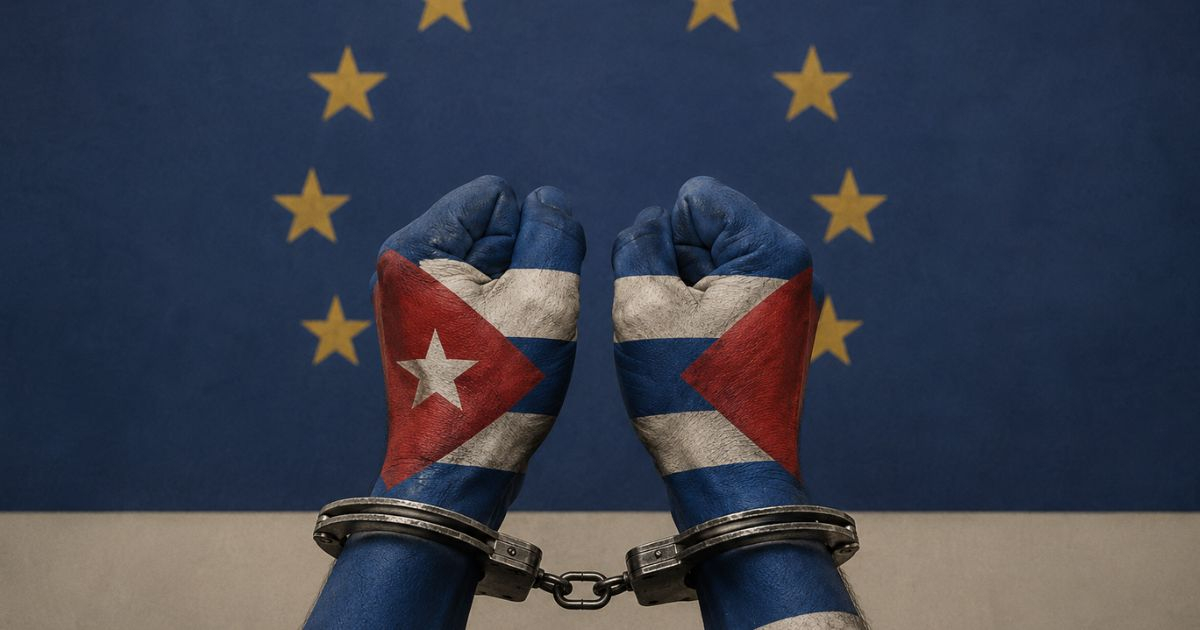
- The European Parliament debate end of EU-Cuba Political Dialogue and Cooperation Agreement following visits by representatives of pasos de cambio
- Former Cuban President Raúl Castro has been indicted in the United States. The U.S. Department of Justice (DOJ) unsealed criminal charges against the 94-year-old in connection to the 1996 shootdown of two humanitarian planes operated by the exile group Brothers to the Rescue, which resulted in the deaths of four people, including three Americans.
Brussels & Miami, May 20 (DPnet).– This Wednesday, May 20, marks the anniversary of Cuba's independence in 1902. It is noteworthy that this date coincides with two unprecedented events in the context of the 67-year-old Cuban dictatorship that are taking place simultaneously in Europe and the United States.
At the same time, the European Parliament is condemning the Political Dialogue and the Cooperation Agreement that had been in effect for years, while legal proceedings have been initiated in the United States against Raúl Castro, the former President of Cuba and brother of Fidel Castro. Although Raúl Castro no longer holds an official position within the regime's structure, he continues to wield significant influence as the ultimate authority in the inner circle of power.
News has also emerged from Brussels indicating that, on May 19, the European Parliament held a plenary debate in which MEPs from various political groups reiterated their demand to terminate the Political Dialogue and Cooperation Agreement (PDCA) between the European Union and the Cuban regime.
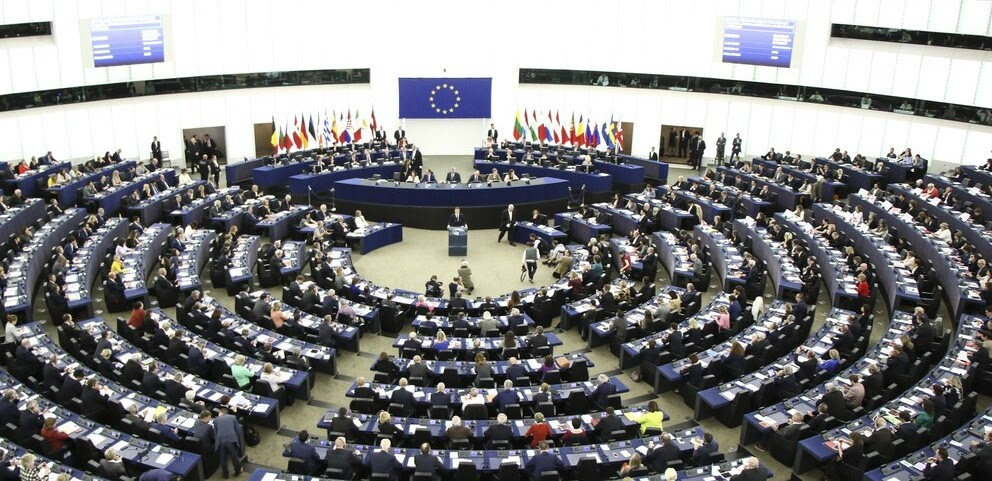
In a powerful demonstration of unity, representatives of Pasos de Cambio officially unveiled the Acuerdo de Liberación (Liberation Agreement) —the landmark transitional framework signed on March 2, 2026 by more than fifty Cuban opposition and civil society organizations, representing voices from both the island and the exile community— and presented it to Members of the European Parliament with support from various political backgrounds. This document underscores a collective agreement to implement a three-phase roadmap for democratic transition: 1) Liberation, 2) Stabilization and Reconstruction, and 3) Democratization, culminating in Cuba’s first free, fair, multiparty, and internationally supervised general elections.
The ensuing debate within the European Parliament was framed by a series of prior European Parliament resolutions —adopted in September 2021, July 2023, and March 2024— which have repeatedly called upon the European Council to trigger Article 85, paragraph 3(b), of the PDCA; to urgently convene the Joint Committee; and to consider suspending the Agreement pursuant to Article 86.
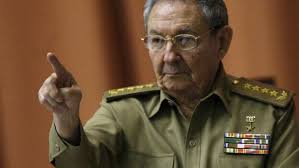 In addition, today's bombshell news report that the United States has reopened legal proceedings against Raúl Castro—proceedings that had been stalled and virtually sealed since the Bill Clinton presidency. This development unfolds against the backdrop of the embargo on Venezuelan oil —which the Maduro regime had been supplying free of charge to Cuba— as well as the ongoing energy and food crises and the medicine shortages increasingly plaguing the country since early 2025.
In response to the urgent humanitarian crisis, Secretary of State Marco Rubio stated that the United States had offered over US$100 million in humanitarian aid, subject to the sole condition that it be delivered directly to the Cuban people through humanitarian organizations such as Caritas. He expressed regret that the Cuban regime had rejected this offer, insisting instead that the aid be channeled through state-run agencies so that it could be distributed at their own discretion.
Florida Republican lawmakers Mario Diaz-Balart, Maria Elvira Salazar and Carlos A. Gimenez, along with fellow Republican Rep. Nicole Malliotakis of New York, had a joint news conference at 9 a.m. this Wednesday to push for formal charges against Cuban leader Raul Castro over his involvement in the 1996 shoot down of the civilian aircraft operated by Brothers to the Rescue.
Two Cuban fighter jet pilots and their commanding officer have also been indicted in the shootdown — but have remained outside the reach of U.S. law enforcement— while living in Cuba.
Raúl Castro has been under U.S. criminal investigation before. In 1993, federal prosecutors in Miami considered charging him and several other senior Cuban military officials with cocaine trafficking based on testimony from several Colombian traffickers that emerged in the drug trial of former Panamanian leader Manuel Noriega. But this other indictment never followed amid concerns about derailing a possible outreach to Cuba then under consideration by President Bill Clinton.
Comments powered by CComment