Democracia Participativa
Participatory Democracy
  • Noticias
    News
    • Headlines
    • Titulares
    • Cuba / Cuban Affairs
    • Venezuela / Venezuelan Affairs
    • Navegando / Browsing
  • Derechos
    H. Rights
    • Derechos Humanos / Human Rights
    • Perspectivas / Perspectives
    • Denuncias / Reports
    • Organizaciones / Campaigns
  • Economía
    Society
    • Toma nota.../Take note...
    • Perspectiva económica: Doug Casey
    • Perspectiva económica: Martínez-Solanas
    • Columnistas invitados/Guest columnists
    • Mundo Sindical / A Worker's World
  • Documentos
    Data & Referenda
    • DOCUMENTOS / DOCUMENTS
    • Documentos en Español
      • Instrumentos Internacionales y Declaraciones
      • Documentos sobre Derechos Humanos
      • Cuba: Iniciativas Democráticas
      • Documentos sobre Economía
      • Doctrina Social Cristiana
      • Otros documentos y perspectivas
      • Fundamentos / Basics
    • Documents in English
      • International Instruments & Declarations
      • Human Rights Documents
      • Documents on Economy
      • Other Documents
      • Christian Social Thought
    • Libros / Outstanding Books
    • Nosotros / About us
      Enlaces / Links
  • ELECCIONES
    Referenda
    • Elecciones / World Elections
    • Referendos / Plebiscites' articles
  • Foro
    Debate
    • Categorías / Forum categories
    • Mensajes / Recent Topics
    • Buscar / Search in Forum
Democracia Participativa
Participatory Democracy
  1. Home
  2. Economía

Toma nota.../Take note...

Notes on the Present Covid-19 Crisis

Written by Chilton Williamson Jr. on 26 March 2020. Posted in Columnistas invitados / Guest columnists.

1. So far as I can discover, opposition parties in the European countries (and elsewhere) are cooperating with the leadership of the party in power by acquiescing in its policies for dealing with the coronavirus pandemic. In fact, the Conservative government of Great Britain is considering inviting representatives of the Labour Party (excluding Jeremy Corbyn) to participate in a national government, though for a limited time only. (A period of four months has been suggested.)

The exception to this pattern is the US Democratic Party, which twice blocked passage of the Trump Administration’s emergency rescue bill costing $1.6 trillion in the Senate by larding it with liberal pork, including increased fuel emissions standards for airlines, Kennedy Center for the Performing Artsexpansion of wind and solar tax credits, other items lifted from the Green New Deal and $25 million for the Kennedy Center as part of a $100 million arts funding. Finally, Democrats and Republicans were able to reach an agreement early Thursday at midnight approving a larger stimulus package costing up to $2 trillion after some of these marginal allotments were added. This Party's obstructive strategy is inspired by Rahm Emmanuel’s maxim about never letting a good crisis go to waste. In this instance, the Democracy is probably overreaching itself. In which case, it may soon discover that the crisis it didn’t allow to go to waste was its own.

2. Le Figaro, the best conservative daily I know of, recently published an interesting feature the newspaper has continued to run for the past several days now. Unfortunately, Figaro doesn’t publish an edition in English, or any other language; its consistently superb contents are available exclusively to people who know French, which is too bad. 

Read more …

  • Hits: 4459
Write comment (0 Comments)

Democracy must be from the ground up, not from the top down

Written by Nonceba Molwele on 12 March 2020. Posted in Columnistas invitados / Guest columnists.

Most community protests are as a result of residents demonstrating because of a lack of consultation by the government before carrying out projects, despite officials submitting reports claiming that there has been a consultative meeting.


The phenomenon of “shutdown movements”, which have seen communities revolt against the government of the day, symbolise a trust deficit. Communities rightly feel they do not have a voice in the government.

Violent disruptions of Integrated Development Plan (IDP) meetings in communities such as Alexandra in Johannesburg are an indication of simmering anger among residents that has been brewing for some time.

The cornerstone of a thriving democracy rests on a government that is in a constant consultative mode with the people it serves. A public consultation process has to be authentic. It should not be a box-ticking exercise by public officials. Public participation is a two-way communication and collaborative problem-solving mechanism with the goal of achieving mutually acceptable decisions.

At the heart of this mechanism is the principle of inclusivity: it should afford all citizens who have a stake in the matter a chance to make input irrespective of their social or economic status.

Read more …

  • Hits: 4586
Write comment (0 Comments)

Comrade Sanders

Written by Chilton Williamson on 04 March 2020. Posted in Columnistas invitados / Guest columnists.

Even Senator Sanders’ severest critics have readily credited him with being, however politically mistaken, a “man of principle.” His recently voiced claim that it is “unfair” to say that “everything is bad” about Fidel Castro’s Communist revolution in Cuba because El Caballo, as “Fidel” was known to his supporters, seized power with a literacy program ready to introduce on the island should put an end to this “principled” business once and for all. We can now see that, if the Comrade Senator is indeed a man of principle, that principle is an evil one.
In context, it is entirely beside the point that in 1959 Cuba already had a literacy rate of eighty percent, and that neighboring Latin American countries have since made enormous advances in this regard without the aid of a program of imprisonment, torture, exile, and expropriation. Castro’s criminal regime and personal cruelty have been extensively documented, including by Antonio Navarro–a wealthy businessman from an affluent family and former acquaintance who had been at Jesuit school with Castro and initially welcomed his deposition of Fulgencia Batista, but later joined the Resistance and finally fled to Florida after his wife and family–in his superb memoir, Tocayo. Sanders has no interest in any of this, as he had no interest in recognizing the inhumanities of the Soviet regime when he honeymooned in Moscow in 1988 almost two decades after Solzhenitsyn’s Gulag Archipelago was published in the United States. Sanders is, and has been for decades, an apologist for a regime whose criminality, when measured by the number of lives sacrificed, exceeds that of the Third Reich. 

Read more …

  • Hits: 4669
Write comment (0 Comments)

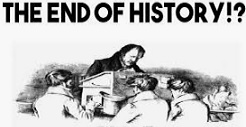
The End of History Revisited

Written by Yascha Mounk ** on 25 February 2020. Posted in Columnistas invitados / Guest columnists.

Until a few years ago, the optimists reigned supreme. Liberal democracy, many argued, was the most just and attractive political regime. It had already triumphed in many of the most militarily dominant, economically advanced, and culturally influential countries in the world. In due course, others would surely follow suit.

The most prominent manifestation of this optimism was Francis Fukuyama’s thesis of the “end of history.” Writing a few months before the Berlin Wall fell, Fukuyama argued that humankind’s ideological evolution had come to an end. Although various twentieth-century political movements had promised to supersede Western liberalism, by the end of the century their impetus had been exhausted. Communism might still have “some isolated true believers” in such far-flung places as “Managua, Pyongyang, or Cambridge, Massachusetts,” but it was no longer a viable contender for ideological hegemony. Devoid of credible alternatives, the world was safe for liberal democracy: “The state that emerges at the end of history is liberal insofar as it recognizes and protects through a system of law man’s universal right to freedom, and democratic insofar as it exists only with the consent of the governed.”

Many social scientists dismissed Fukuyama’s work out of hand. But the truth of the matter is that scholars who would never have deigned to make the bold pronouncements that turned Fukuyama into a worldwide celebrity were committed to equally far-reaching assumptions. Indeed, perhaps the most influential empirical article on the fate of democracy published since 1989 made a claim that, properly understood, was even more triumphalist. According to Adam Przeworski and Fernando Limongi, countries that had changed governments through free and fair elections at least twice, and that had reached a level of annual per capita income higher than that of Argentina in 1975 (a figure that they gave as $6,055 “expressed in constant U.S. dollars computed at purchasing-power parities and expressed in 1985 prices,” or close to $14,500 in 2019 terms), were consolidated democracies. They could expect to enjoy life eternal. As Przeworski, Limongi, and two other colleagues had put it in an earlier article in the Journal of Democracy, at or above this level of per capita income, “democracy is certain to survive, come hell or high water.”

Read more …

  • Hits: 5096
Write comment (0 Comments)

Karl Popper y la sociedad abierta

Written by Oscar Álvarez Araya on 24 February 2020. Posted in Columnistas invitados / Guest columnists.

Crítico de los historicismos, nacionalismos y todo tipo de dogmatismos. Karl Popper

Karl Popper fue un filósofo liberal y teórico de la ciencia austro-británico. Nace en Viena, Imperio austrohúngaro, el 28 de julio de 1902. Sus padres tenían antepasados judíos, pero se habían convertido al protestantismo. Por su parte, Popper se declara agnóstico y luego se hace ciudadano británico.

Estudia Filosofía en la Universidad de Viena donde se doctora en 1928. Huyendo del ascenso del nacional socialismo se exilia en Nueva Zelanda donde trabaja como profesor en la Universidad de Canterbury desde 1937 hasta 1945. Allí escribe su obra cumbre, La sociedad abierta y sus enemigos.

Posteriormente pasa a ser profesor en la Escuela de Economía y Ciencia Política de Londres de 1949 hasta 1969 cuando se jubila. Fue su amigo Friedrich Hayek quien le consiguió esa cátedra.

En su juventud es socialista pero luego pasa a adoptar posiciones liberales y llega a ser miembro de la Sociedad Mont Pelerin. Sin embargo, muestra algunas diferencias con Hayek, el fundador y primer presidente de dicha sociedad, pues Popper no es tan devoto de la economía de libre mercado y acepta algún grado de intervención del estado en la economía sin llegar a los extremos que plantea el marxismo.

Read more …

  • Hits: 4767
Write comment (0 Comments)

More Articles …

  1. Confusiones sobre la Economía de Mercado
  2. Trump’s Mideast Plan a Major Breakthrough But Risky
  3. Un Latinoamericano Ejemplar
  4. La estrategia comercial perdedora de Beijing
  5. There’s Nothing ‘Compassionate’ About Open Borders
  6. Cicerón, «padre de la patria» en Roma
  7. ¿Qué significa ser Social Cristiano hoy día?
  8. Taiwan: a democracy in Asia that works
  9. Los padres de la democracia
  10. ¿Son las religiones responsables de las guerras, el terrorismo y el odio?
  11. Los Derechos Humanos en la encrucijada
  12. The United States must remain a benevolent Leader
  13. 'The Godfather,' Acton, and the price of liberty
  14. Cataluña y el desarrollo desigual de la Historia

Subcategories

Perspectiva económica: Martínez-Solanas Article Count:  122

Perspectiva Económica: Elías Amor Article Count:  35

Perspectiva económica: Castañeda Article Count:  89

Columnistas invitados / Guest columnists Article Count:  1310

Mundo Sindical / A Worker's World Article Count:  227

Perspectiva Económica: Doug Casey Article Count:  6

Page 171 of 224

  • 166
  • 167
  • 168
  • 169
  • 170
  • 171
  • 172
  • 173
  • 174
  • 175
A fanatic is one who wont change his mind and wont change his subject.
Winston Churchill

Buscar / Search

Identificarse / Login

Identificarse / Login

  • Forgot your password?
  • Forgot your username?

Popular Economía / Most Read

  • Un Cero a la Izquierda
  • Retirarle fondos al Consejo de Derechos Humanos es un error monumental
  • ¿Premio Pulitzer a la desinformación?
  • ¿Qué es DOGE? ¿Cómo funciona? ¿Quién lo dirige?
  • Money, money, money – The US' new political approach

Documentos Economía / Random Economy Docs

  • El Indicador de Progreso Genuino y el Índice de Desarrollo Humano
  • Human Development Report 2020
  • Towards Reforming the International Financial and Monetary Systems in the context of Global Public Authority
  • Creating Good and not just Goods

Hacer una donación
/ Donate now

  • Consulta popular en plebiscito

    [

  • Cuba: Libertad y Responsabilidad. Desafíos y Proyectos

    El autor de esta magna obra sobre la realidad cubana es Dagoberto Valdés Hernández, un Ingeniero Agrónomo de profesión, educador de vocación y dirigente católico de alma. Desde su Provincia de Pinar del Río, en Cuba, ha dirigido con firmeza y serenidad la Revista Vitral, con una notable capacidad...

  • Edificando la Democracia Participativa

    Edificando la Democracia Participativa Gerardo E. Martínez-Solanas Una de las razones fundamentales para promover la democracia participativa consiste en que tal sistema ofrece al ciudadano una capacidad de participar en decisiones orientadas a desarrollar una economía socialmente justa y...

  • Audiencia Nacional española desata crisis diplomática con China

    Dictó una orden de busca y captura contra cinco miembros de la nomenclatura china por delitos de lesa humanidad y genocidio contra el pueblo tibetano Exteriores alega que la división de poderes le impide influir en los jueces El expresidente Jiang Zemin y el exprimer ministro Li Peng (ambos en la...

  • Los malos usos de la Historia

    Una guerra dinástica, típica del Antiguo Régimen, no se puede explicar como un conflicto nacional entre España y Cataluña.Tampoco la unión de reinos bajo los Reyes Católicos fue el nacimiento de una nación Puede que alguien que no haya dedicado mucho tiempo a pensar sobre estas cosas crea que la...

Facebook
© 2003 - 2025 Participatory Democracy Cultural Initiative, Inc.
  • Noticias
    News
    • Headlines
    • Titulares
    • Cuba / Cuban Affairs
    • Venezuela / Venezuelan Affairs
    • Navegando / Browsing
  • Derechos
    H. Rights
    • Derechos Humanos / Human Rights
    • Perspectivas / Perspectives
    • Denuncias / Reports
    • Organizaciones / Campaigns
  • Economía
    Society
    • Toma nota.../Take note...
    • Perspectiva económica: Doug Casey
    • Perspectiva económica: Martínez-Solanas
    • Columnistas invitados/Guest columnists
    • Mundo Sindical / A Worker's World
  • Documentos
    Data & Referenda
    • DOCUMENTOS / DOCUMENTS
    • Documentos en Español
      • Instrumentos Internacionales y Declaraciones
      • Documentos sobre Derechos Humanos
      • Cuba: Iniciativas Democráticas
      • Documentos sobre Economía
      • Doctrina Social Cristiana
      • Otros documentos y perspectivas
      • Fundamentos / Basics
    • Documents in English
      • International Instruments & Declarations
      • Human Rights Documents
      • Documents on Economy
      • Other Documents
      • Christian Social Thought
    • Libros / Outstanding Books
    • Nosotros / About us
      Enlaces / Links
  • ELECCIONES
    Referenda
    • Elecciones / World Elections
    • Referendos / Plebiscites' articles
  • Foro
    Debate
    • Categorías / Forum categories
    • Mensajes / Recent Topics
    • Buscar / Search in Forum