US President Donald Trump called on Congress to reject "the politics of revenge, resistance and retribution" as he faced a divided hall for his State of the Union speech.
Feb.6 (DP.net).– The US President declared before Congress that it was time “to bridge old divisions, 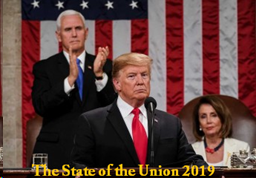 heal old wounds, build new coalitions, forge new solutions and unlock the extraordinary promise of America's future".
Mr Trump spoke at a critical moment in his presidency, staring down a two-year stretch that will determine whether he is re-elected or leaves office in defeat, facing at this point a low popularity rating of 43%.
But what did we learn from the speech on Tuesday night? Let us see five key talking points from Mr Trump’s major address delivered to the nation:
- Hits: 5951

 the United States will formally begin the process of withdrawing from the Intermediate-Range Nuclear Forces Treaty, the Cold War-era arms control accord with Russia.