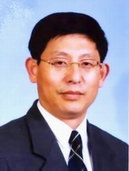
Taipei, Aug.13.─ Confirmation that the visiting Shanghai delegation to the cross-strait cities forum in Taipei would be led by a member of a political organization tasked with "united front" tactics was downplayed by Taipei officials Friday.
Sha Hailin (沙海林) of the Shanghai Municipal Committee is a member of the United Front Work Department (UFWD, 中共中央統戰部), a special organ of the Chinese Communist Party (CCP).
Written by The Economist on .
Posted in Headlines.
The French are growing impatient with lofty calls to persevere against terror
Saint-Etienne-du-Rouvray.─ No target is too soft for killers inspired by Islamic State. On July 26th in this small town in Normandy, two knife-wielding terrorists entered a church. They took hostage the 85-year-old priest celebrating mass and the tiny congregation, two nuns and two parishioners. They slit Father Jacques Hamel’s throat as he knelt before the altar. Police shot and killed the terrorists; one other hostage was critically injured. The jihadists’ “barbaric attack on a church”, as the prime minister, Manuel Valls, put it, recast France’s conflict with terror as a primitive war of religion.
The murder added to the nation’s sense of siege. Less than two weeks had elapsed since the horror of Nice, when a man of Tunisian origin killed 84 people by driving a lorry through a crowd celebrating Bastille Day. The mood of defiant solidarity forged after last year’s Charlie Hebdo and Bataclan attacks in Paris is eroding.
Written by Gerardo E. Martínez-Solanas on .
Posted in Headlines.
'Originalism says that when you consult the text [of the Constitution], you give it the meaning it had when it was adopted,
not some later modern meaning'. Antonin Scalia
Grand Rapids, Aug.4 (DP.net).─ The Acton Institute announced their 10th Faith & Freedom Award to be presented at their Annual Dinner on October 27th, 2016. These awards are granted posthumously, and Margaret Thatcher, William F. Buckley Jr, and Cardinal Van Thuan are among the nine previous personalities receiving this important recognition. This year it has been granted in memoriam to Judge Antonin Scalia.
The Faith & Freedom Award was established as part of the Acton Institute's tenth Anniversary celebration in 2000. The award recognizes an individual who exemplifies commitment to faith and freedom through outstanding leadership in civic, business, or religious life.
Justice Antonin Scalia spent more than five decades in the legal profession, ultimately earning a nomination to the US Supreme Court by President Ronald Reagan en 1986. Scalia was an ardent defender of individual righs and limited government, most notably through his advocacy of originalism, a philosophy emphasizing judicial restraint as well as devotion to the US Founder's original constitutional intent. During his tenure on the Supreme Court, Scalia heard nearly 2,500 cases and authored or co-authored some 800 opinions.