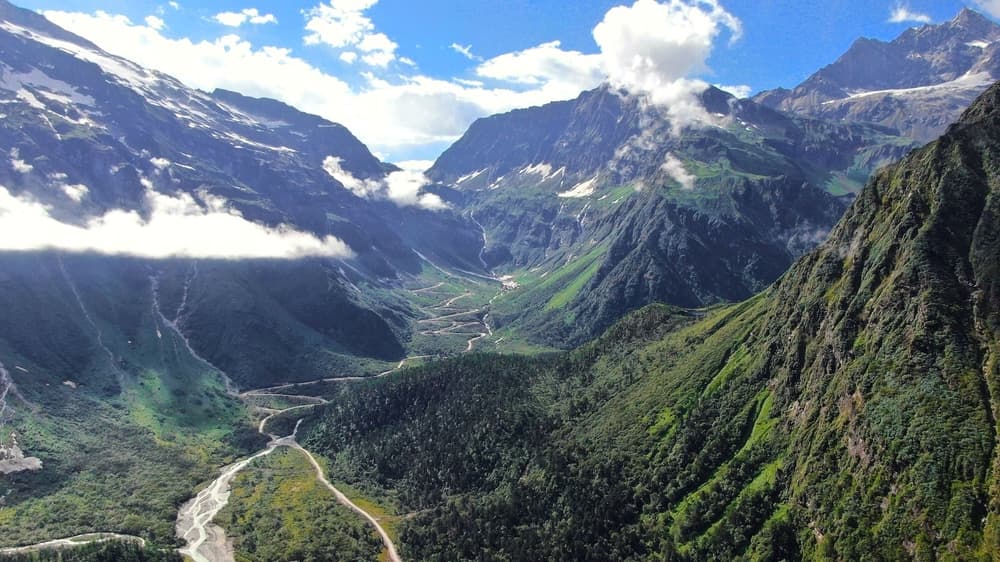
 Among other projects, such as the construction of mega bridges shown in the adjacent report, China’s plans to build a massive hydro project in Tibet have sparked fears about the environmental impacts on the world’s longest and deepest canyon. It has also alarmed neighboring India, which fears that China could hold back or even weaponize river water it depends on. Among other projects, such as the construction of mega bridges shown in the adjacent report, China’s plans to build a massive hydro project in Tibet have sparked fears about the environmental impacts on the world’s longest and deepest canyon. It has also alarmed neighboring India, which fears that China could hold back or even weaponize river water it depends on. |
Geological instability exposed on the Tibetan plateau under Chinese irresponsible construction programs
Nov. 30. – Two weeks ago, news media reported that a new bridge collapsed in Tibet. The Red Flag (Hongqi) bridge was 758 meters long, straddling a massive gorge where the Tibetan Plateau meets the Sichuan Basin. Completed in January 2025, as part of a high-profile dam-building project, it was supposedly engineered to be able to withstand an 8.0 magnitude earthquake.
One moment the bridge was standing. The next, a massive section had crumpled into the river below.
Miraculously, no injury to life was reported. But this near miss is a clear warning sign of future disasters.
An International Campaign for Tibet's (ICT’s) new report shows that the collapse happened in a geologically 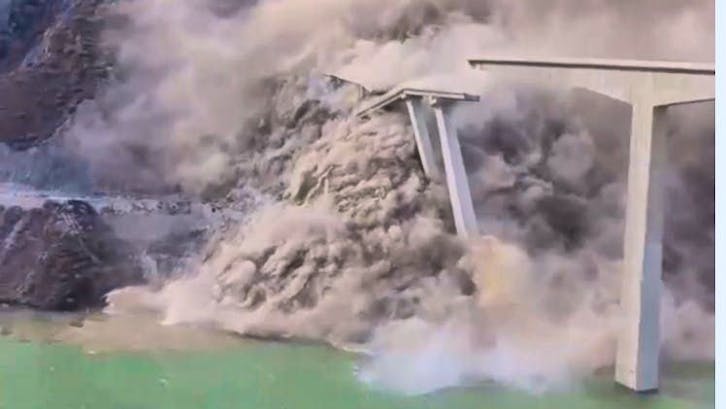 volatile region, which has already been weakened by China’s relentless construction. As China builds ever more massive dams in Tibet, they tunnel through mountains, blast through bedrock, and move rivers in service of exploiting Tibet’s water for their energy.
When the ground shifts, foundations crack. And that’s what has happened here.
The Red Flag bridge is immediately adjacent to the Shuangjiankou dam site, dubbed to be the world’s highest dam upon completion, which began initial water filling in April 2025, six months before before the bridge collapsed. Evidence points to reservoir-induced geological destabilization as the primary trigger.
That geological destabilization triggered a landslide which destroyed the bridge. But despite expert warnings, China isn’t stopping there.
China continues to push dangerous hydropower projects that displace Tibetan communities, strip forests, erase sacred sites, and remove nomads from lands they have stewarded for generations. They are currently planning the Metok Dam, which will be the largest dam in the world, on a similarly volatile site. And the crackdowns on Tibetans peacefully protesting construction, such as in Derge, show that Beijing will go to any lengths to quash dissent.
This bridge collapse is another ominous sign that Tibet’s fragile environment is under the control of China’s expansionist plans that have no considerations for Tibetans' rights and well-being nor for those of their neighboring countries.
Comments powered by CComment