Estonia and Moldova have similar origins, but could not be more different. Both declared independence from the Soviet Union in August 1991. Both tiny countries have big Russian minorities, and both have struggled with emigration and shrinking populations. Yet where Estonia has joined the EU, become an IT hub and is virtually corruption-free, Moldova struggles with corruption and its citizens are five times poorer than Estonia’s. Was Estonia’s fortune down to luck or good choices?
Moldova and Estonia show how different democracies can be
One post-Soviet country defeated corruption, the other is still battling it
 Chisinay and Tallinn, Feb.28.– Kaja Kallas, a former competition lawyer and member of the European Parliament, is just the sort of businesslike politician one expects in Estonia. She took over as leader of Estonia’s liberal Reform Party last year; polls show it in a dead heat with the ruling Centre Party. She has run a technocratic campaign, focusing on education and tax policy. But she loses her cool when she talks about EKRE, Estonia’s anti-immigrant, Eurosceptic populist party. “They want to destroy everything,” she says: all the institutions that have made her open, tech-savvy nation more successful than “other countries that had the same starting-point. Take Moldova, for example.”
Indeed, take Moldova. Like Estonia, it declared independence from the Soviet Union in August 1991. Both tiny countries have big Russian minorities, and both have struggled with emigration and shrinking populations. Yet in many ways they are polar opposites.
- Hits: 6994
 Y más importante, por qué su juramento como presidente encargado es perfectamente constitucional.
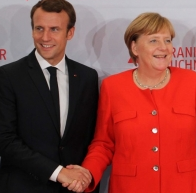 actuación, mientras que la prioridad alemana es mantener el statu quo y la cohesión de la Unión, y preservar el papel de Europa en la OTAN.
 The corporate world is plagued by a drive to “gigantism” that is a veiled form of monopolistic and oligopolistic trends dominating all other trends of globalization (some of them beneficial). This drive to gigantism is nothing new; it started with the Industrial Revolution of the XIX century, but its development has become overwhelming and crushing with the forming of blocs of firms, holding companies, and conglomerates that are amassing even greater resources. In addition, globalization has given way to the proliferation of mergers. These consolidations exhibit the same disregard for restraint and employ similarly disruptive means of expansion as those in stock market manipulations and hostile merge/takeover, among other strategies giving way to the formation of powerful cartels (oligopolies) and monopolies. Joseph Stiglitz offers us in the article that follows a partial remedy, so that these large conglomerates cannot evade their fiscal responsibilities.
 socially responsible, but the first element of social responsibility should be paying your fair share of tax. Instead, globalization has enabled multinationals to encourage a race to the bottom, threatening the revenues that governments need to function properly.
 indicators across five broad categories: electoral process and pluralism, the functioning of government, political participation, democratic political culture and civil liberties.