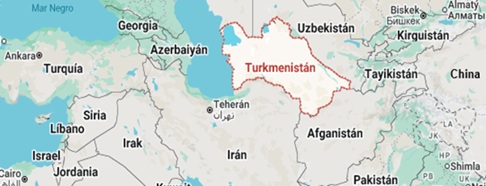
Erevan, Apr. 15 (DPnet).– Turkmenistan stands as a stark example of a "post-Soviet totalitarian theme park," where oppression is rampant, the economy is strictly state-controlled, and extreme personality cults echo the darkest days of Soviet tyranny. The remnants of this oppressive regime manifest in a centrally planned economy heavily dependent on cotton and gas, a media landscape entirely controlled by the state, the use of forced labor, relentless suppression of dissent, and the troubling practice of using psychiatric hospitals to detain activists who dare to speak out.
Following the collapse of Soviet rule in 1991, independence for Turkmenistan did not bring about meaningful change. Instead, the shadows of the old system lingered, as former Communist Party Secretary Saparmurad Niyazov seized power and proclaimed himself Turkmenbashi, or "Great Leader of all Turkmen." This consolidation of power has perpetuated a legacy of repression and control that stifles progress and undermines the very essence of freedom for the people of Turkmenistan.
Widely recognized as an eccentric, megalomaniacal dictator, Niyazov constructed a cult of personality around himself during his 15-year tyle as president through a series of bizarre and oppressive policies. He renamed months of the year after himself, family members, and Turkmen heroes and poets, and he ereted a golden statue of his likeness in the center of Ashgabat, the nation capital. He also published a spiritual and philosophical work titled Ruhnama (The Book of the Soul), which became compulsory reading for schoolchildren. 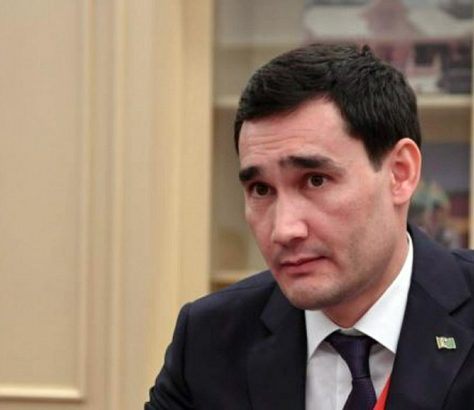
Although Niyazov died in 2006, his legacy of authoritarian rule continues to persist today. Since March 2022 Serdar Gurbanguliyevich Berdimuhamedow has been the president of Turkmenistan. Previously he served as vice-president of the council of ministers under former President Gurbanguly Berdimuhamedow, his father. On 25 March, he presented his cabinet, basically confirming his father’s ministers in their posts.
| When the Soviet Union collapsed in 1991, the KGB was dissolved, but the agency's tactics of surveilling and terrorizing its own citizens has been revived under Putin's rule and continued in many former Soviet republics under different governmental agencies that retain ties to Putin's Russian intelligence services. In Turkmenistan, that agency was named KNB. Despite changes following the collapse of the Soviet Union, many who lived under the Sovieet watchful eye of the KGB continue to use this acronym when referring to their country's intelligence services, |
The regime operates as a dictatorial, closed society that restricts free expression and punishes dissent, often employing methods reminiscent of Soviet security services. In this environment, Christian worship is limited to churches that belong to government-sanctioned denominations. Five Central Asian nations — the former Soviet republiocs of Kazakhstan, Kyrgyzstan, Tajikistan, Turkmenistan and Uzbekistan — restrict and even forbid teaching religious beliefs and practices to children. Tajikistan and Turkmenistan have strict laws forbidding the teaching of religion to anyone under 18 unless the teacher is a government-sanctioned and licensed official following officially sanctioned doctrine.
Human rights organizations report that the government employs tactics such as forced disappearances and detaining the family members of dissidents in an effort to silence any opposition. If the government learns of a Turkmen citizen converting to Christianity, the new believer may face harassment, pressure, and even violent beatings or torture, and they risk imprisonment on any fabricated charges.
Only 4% of the population remains Christian in the country, as most have fled to escape repression and persecution. The vast majority, 94%, of Turkmen people practice Sunni Islam. Christians who actively share their faith in Turkmenistan are closely scrutinized by government authorities. As evidenced by multiple reports, the authorities surveil Christians' homes, threaten their family members and arrest them on false pretenses in attempts to eliminate their faith from society.
Turkmenistan is ranked 29th among the 50 worst countries for Christians, but despite the country's long history of oppression, the gospel is proclaimed regularly through a variety of media that escapes government control.
Although Turkmenistan has a long history of isolation and dictatorship, the country – with just over seven million inhabitants – has prospered economically because of its huge natural gas reserves and access to the Caspian Sea.