Democracia Participativa
Participatory Democracy
  • Noticias
    News
    • Headlines
    • Titulares
    • Cuba / Cuban Affairs
    • Venezuela / Venezuelan Affairs
    • Navegando / Browsing
  • Derechos
    H. Rights
    • Derechos Humanos / Human Rights
    • Perspectivas / Perspectives
    • Denuncias / Reports
    • Organizaciones / Campaigns
  • Economía
    Society
    • Toma nota.../Take note...
    • Economic Perspective: Doug Casey
    • Perspectiva económica: Martínez-Solanas
    • Columnistas invitados/Guest columnists
    • Mundo Sindical / A Worker's World
  • Documentos
    Data & Referenda
    • DOCUMENTOS / DOCUMENTS
    • Documentos en Español
      • Instrumentos Internacionales y Declaraciones
      • Documentos sobre Derechos Humanos
      • Cuba: Iniciativas Democráticas
      • Documentos sobre Economía
      • Doctrina Social Cristiana
      • Otros documentos y perspectivas
      • Fundamentos / Basics
    • Documents in English
      • International Instruments & Declarations
      • Human Rights Documents
      • Documents on Economy
      • Other Documents
      • Christian Social Thought
    • Libros / Outstanding Books
    • Nosotros / About us
      Enlaces / Links
  • Elecciones
    Referenda
    • Elecciones / World Elections
    • Referendos / Plebiscites' articles
  • Foro
    Debate
    • Categorías / Forum categories
    • Mensajes / Recent Topics
    • Buscar / Search in Forum
Democracia Participativa
Participatory Democracy
  1. Home
  2. Documentos

Libros / Outstanding Books

How China became capitalist

Written by Ronald Coase & Ning Wang on 10 November 2013. Posted in Libros recomendados / Outstanding Books.

ISBN: 978-1-137-35143-2 Paperback

 First published April 8, 2013 by Palgrave Macmillan

272 pages

Ronald Coase, reconocido economista institucionalista quien obtuvo el Nobel en 1992 y falleció este año, y Ning Wang, académico chino que vivió en situ las transformaciones, presentan un fascinante relato de la transformación china.  De una economía colectivista, agraria, atrasada, cerrada, sin un sector privado y sin rol del mercado a otra vibrante, abierta, manufacturera, la segunda economía mundial, con un vibrante sector privado y un amplio rol del mercado.  La transformación ha estado acompañada de la recuperación de las tradiciones culturales y se realizó fundamentalmente en poco más de dos décadas desde la muerte de Mao en 1976 hasta finales de los años 1990s.  Constituye la más extraordinaria y rápida transformación de la historia moderna.  Unos cuatro centenares de millones de personas superaron la pobreza y China tiene una amplia clase media.

El libro es una interesante y provechosa lectura con un claro, cuidadoso y sustantivo análisis económico y una muy particular interpretación de la historia y economía política china y de su cambio institucional.  El libro tiene 6 capítulos que destacan las transformaciones graduales, pero sistémicas y progresivas desde 1976, siempre en sola una dirección, aunque con una interrupción en 1988-1991.  China a la muerte de Mao; China en transición; cómo comenzaron las reformas de mercado en China; un ave en una jaula: las reformas de mercado en el socialismo; creciendo fuera del socialismo: el capitalismo con características chinas; y del capitalismo a capitalismos.  El último capítulo presenta la diferente interpretación de los autores de las reformas chinas.

El libro comienza por la difícil situación a la muerte de Mao y las primeras medidas adoptadas por Hua Guofeng para modernizar la economía y lograr su desarrollo con base en aumentar la producción de la gran industria, ampliar la infraestructura y la apertura externa (el gran salto hacia fuera), el inicio de la progresiva incorporación a la globalización.  Dos años después cuando Deng Xiaoping asumió el liderato político dio prioridad a continuar la apertura y se comenzaron reformas para aumentar la producción agrícola mejorando los precios de compra a los agricultores y disminuyendo los precios de los insumos.  Asimismo, se descentralizaron a los gerentes las decisiones de las empresas estatales sobre los niveles de producción, remuneración a los empleados y la inversión.  Deng Xiaoping sustituyó el lema de la lucha de clases por la modernización del socialismo.

Read more …

  • Hits: 16297
Write comment (0 Comments)

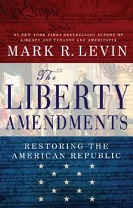
The Liberty Amendments

Written by Mark Levin on 13 August 2013. Posted in Libros recomendados / Outstanding Books.

THE LIBERTY AMENDMENTS
Threshold Editions, 2013
ISBN: 9781451606270

Mark Levin's The Liberty Amendments

Book Review by Thomas Lifson Book: The Liberty Amendments

Tomorrow marks the publication of Mark Levin's important new book, The Liberty Amendments. I must confess that I had some trepidation when starting to read it, for as the editor of American Thinker I turn down most submissions that propose amending the Constitution as a solution for what ails us. The reason is simple: amending the Constitution is deliberately difficult to accomplish, so changing it is a solution easy to propose and difficult to dispose.
 

But Mark, whose body of work as a political thinker includes not just the significant tomes Men in Black, Liberty and Tyranny, and Ameritopia but also three hours a day of extemporaneous political talk on one the nation's most popular syndicated talk shows, is in a different category. And not simply because of his stature. The Liberty Amendments consists of a well thought-out program of amendments (offered as a starting point for discussion and modification), combined with a political strategy that could (at least potentially) work: using a constitutional convention called by two-thirds of the states. As Article 5 of the Constitution reads:

The Congress, whenever two thirds of both Houses shall deem it necessary, shall propose Amendments to this Constitution, or, on the Application of the Legislatures of two thirds of the several States, shall call a Convention for proposing Amendments, which, in either Case, shall be valid to all Intents and Purposes, as Part of this Constitution, when ratified by the Legislatures of three fourths of the several States, or by Conventions in three fourths thereof, as the one or the other Mode of Ratification may be proposed by the Congress; Provided that no Amendment which may be made prior to the Year One thousand eight hundred and eight shall in any Manner affect the first and fourth Clauses in the Ninth Section of the first Article; and that no State, without its Consent, shall be deprived of its equal Suffrage in the Senate.

Read more …

  • Hits: 17050
Write comment (0 Comments)

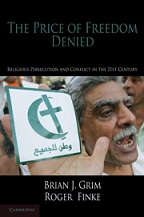
The Price of Freedom Denied

Written by Brian J. Grim & Roger Finke on 17 December 2012. Posted in Libros recomendados / Outstanding Books.

Religious Freedom DeniedReligious Persecution and Conflict in the Twenty-First Century
  • Brian J. Grim, Pew Research Center
  • Roger Finke, Pennsylvania State University
  • Paperback
Series: Cambridge Studies in Social Theory, Religion and Politics
  • ISBN:9780521146838
  • Publication date:December 2010
  • 272pages
  • 32 b/w illus. 29 tables
  • Dimensions: 228 x 152 mm
  • Weight: 0.37kg

The Price of Freedom Denied shows that, contrary to popular opinion, ensuring religious freedom for all reduces violent religious persecution and conflict. Others have suggested that restrictions on religion are necessary to maintain order or preserve a peaceful religious homogeneity. Brian J. Grim and Roger Finke show that restricting religious freedoms is associated with higher levels of violent persecution. Relying on a new source of coded data for nearly 200 countries and case studies of six countries, the book offers a global profile of religious freedom and religious persecution. Grim and Finke report that persecution is evident in all regions and is standard fare for many. They also find that religious freedoms are routinely denied and that government and the society at large serve to restrict these freedoms. They conclude that the price of freedom denied is high indeed.

In a nutshell, this book:

  • Offers a global profile of religious freedom and persecution, including information on nearly 200 countries and selected case studies
  • Explains variation in religious persecution across countries and religious traditions, offering an planation of why persecution tends to be higher among some populations
  • Demonstrates and documents how religious freedoms are denied by the government and the society at large
  • Argues that religious freedoms serve to defuse the potential conflict and reduce the level of violent religious persecution

[ See an analysis of Religious Freedom HERE ]

  • Hits: 19218
Write comment (0 Comments)

More Articles …

  1. Cuba en la era de Raúl Castro
  2. Desmontando el progresismo
  3. UNA PALABRA MÁS FUERTE. Los escritos de Mons. Román
  4. The Eagle Unbowed: Poland and the Poles in the Second World War
  5. Patterns of democracy
  6. Why Nations Fail
  7. Jacques Maritain: Librería Virtual
  8. An Integrated Approach to Elections and Conflict

Page 28 of 36

  • 23
  • 24
  • 25
  • 26
  • 27
  • 28
  • 29
  • 30
  • 31
  • 32
Es importante que todos aprendamos cada vez más a escuchar, para entrar en diálogo. Luego, también escuchar a los demás: saber construir puentes, saber escuchar para no juzgar, no cerrar las puertas, pensando que nosotros tenemos toda la verdad y que nadie más puede decirnos nada.
SS León XIV

Buscar / Search

Identificarse / Login

Identificarse / Login

  • Forgot your password?
  • Forgot your username?

Cuba: Iniciativas Democráticas

  • POR UN NUEVO COMIENZO. Documento completo.
  • CUBA, ¿Ideología o Filosofía?
  • Visiones para una Transición – Propuestas
  • Reforma Constitucional y Libertad Religiosa en Cuba
  • La transición en Cuba: Memoria Histórica, Justicia Transicional y Reconciliación Nacional. Visión y propuestas

Información Básica / Basic Information

  • European Citizen's Initiative
  • European Parliament - Political Groupings & Composition
  • ¿Qué es el Consejo de Europa? / What is the Council of Europe?

Hacer una donación
/ Donate now

  • Consulta popular en plebiscito

    [

  • Cuba: Libertad y Responsabilidad. Desafíos y Proyectos

    El autor de esta magna obra sobre la realidad cubana es Dagoberto Valdés Hernández, un Ingeniero Agrónomo de profesión, educador de vocación y dirigente católico de alma. Desde su Provincia de Pinar del Río, en Cuba, ha dirigido con firmeza y serenidad la Revista Vitral, con una notable capacidad...

  • Edificando la Democracia Participativa

    Edificando la Democracia Participativa Gerardo E. Martínez-Solanas Una de las razones fundamentales para promover la democracia participativa consiste en que tal sistema ofrece al ciudadano una capacidad de participar en decisiones orientadas a desarrollar una economía socialmente justa y...

  • Audiencia Nacional española desata crisis diplomática con China

    Dictó una orden de busca y captura contra cinco miembros de la nomenclatura china por delitos de lesa humanidad y genocidio contra el pueblo tibetano Exteriores alega que la división de poderes le impide influir en los jueces El expresidente Jiang Zemin y el exprimer ministro Li Peng (ambos en la...

  • Los malos usos de la Historia

    Una guerra dinástica, típica del Antiguo Régimen, no se puede explicar como un conflicto nacional entre España y Cataluña.Tampoco la unión de reinos bajo los Reyes Católicos fue el nacimiento de una nación Puede que alguien que no haya dedicado mucho tiempo a pensar sobre estas cosas crea que la...

Facebook
© 2003 - 2026 Participatory Democracy Cultural Initiative, Inc.
  • Noticias
    News
    • Headlines
    • Titulares
    • Cuba / Cuban Affairs
    • Venezuela / Venezuelan Affairs
    • Navegando / Browsing
  • Derechos
    H. Rights
    • Derechos Humanos / Human Rights
    • Perspectivas / Perspectives
    • Denuncias / Reports
    • Organizaciones / Campaigns
  • Economía
    Society
    • Toma nota.../Take note...
    • Economic Perspective: Doug Casey
    • Perspectiva económica: Martínez-Solanas
    • Columnistas invitados/Guest columnists
    • Mundo Sindical / A Worker's World
  • Documentos
    Data & Referenda
    • DOCUMENTOS / DOCUMENTS
    • Documentos en Español
      • Instrumentos Internacionales y Declaraciones
      • Documentos sobre Derechos Humanos
      • Cuba: Iniciativas Democráticas
      • Documentos sobre Economía
      • Doctrina Social Cristiana
      • Otros documentos y perspectivas
      • Fundamentos / Basics
    • Documents in English
      • International Instruments & Declarations
      • Human Rights Documents
      • Documents on Economy
      • Other Documents
      • Christian Social Thought
    • Libros / Outstanding Books
    • Nosotros / About us
      Enlaces / Links
  • Elecciones
    Referenda
    • Elecciones / World Elections
    • Referendos / Plebiscites' articles
  • Foro
    Debate
    • Categorías / Forum categories
    • Mensajes / Recent Topics
    • Buscar / Search in Forum