Democracia Participativa
Participatory Democracy
  • Noticias
    News
    • Headlines
    • Titulares
    • Cuba / Cuban Affairs
    • Venezuela / Venezuelan Affairs
    • Navegando / Browsing
  • Derechos
    H. Rights
    • Derechos Humanos / Human Rights
    • Perspectivas / Perspectives
    • Denuncias / Reports
    • Organizaciones / Campaigns
  • Economía
    Society
    • Toma nota.../Take note...
    • Economic Perspective: Doug Casey
    • Perspectiva económica: Martínez-Solanas
    • Columnistas invitados/Guest columnists
    • Mundo Sindical / A Worker's World
  • Documentos
    Data & Referenda
    • DOCUMENTOS / DOCUMENTS
    • Documentos en Español
      • Instrumentos Internacionales y Declaraciones
      • Documentos sobre Derechos Humanos
      • Cuba: Iniciativas Democráticas
      • Documentos sobre Economía
      • Doctrina Social Cristiana
      • Otros documentos y perspectivas
      • Fundamentos / Basics
    • Documents in English
      • International Instruments & Declarations
      • Human Rights Documents
      • Documents on Economy
      • Other Documents
      • Christian Social Thought
    • Libros / Outstanding Books
    • Nosotros / About us
      Enlaces / Links
  • Elecciones
    Referenda
    • Elecciones / World Elections
    • Referendos / Plebiscites' articles
  • Foro
    Debate
    • Categorías / Forum categories
    • Mensajes / Recent Topics
    • Buscar / Search in Forum
Democracia Participativa
Participatory Democracy
  1. Home
  2. Documentos
  3. Libros / Outstanding Books

Libros / Outstanding Books

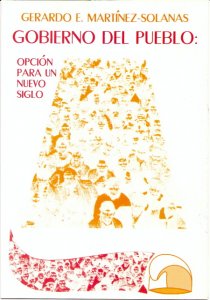
Gobierno del Pueblo: Opción para un Nuevo Siglo

Written by Gerardo E. Martínez-Solanas on 12 July 2017. Posted in Libros recomendados / Outstanding Books.

Gobierno del Pueblo: opción para un nuevo siglo

Ediciones Universal, Miami; 1997.
ISBN-13: 978-0897298612.

114 págs
[Puede leer la reseña al pie
  de las instrucciones que siguen
]

Envíe un donativo de $9.95 a nombre de: DemocraciaParticipativa.net, remítalo a 2150 SW 123 AVE, Miami, FL 33175-1199 y le obsequiaremos un ejemplar de este libro (incluye gastos de envío). También puede adquirir el texto íntegro por correo electrónico, dirigiendo su pedido con un cheque o money order por $3.95 a la misma direción, incluyendo su dirección electrónica. Ambos donativos son deducibles de la declaración de impuestos al IRS (Estados Unidos)Section 501(c)(3).

Si lo prefiere, puede realizar su pago mediante PAYPAL:

https://www.paypal.com/paypalme/Marsola40
Abra este enlace (link) y pulse donde dice "Send".
Entre a su cuenta de PayPal y y señale la cantidad de su pago.
Si es $3.95, escriba en "Add a note":
"Para Gobierno del Pueblo, edición virtual" y añada su eMail.
Si es $9.95, escriba en "Add a note":
"Para Gobierno del Pueblo, edición impresa" y añada su dirección postal.

**********

La obra de Gerardo Martínez-Solanas presenta una agenda para el siglo XXI. Constituye un aporte para varias generaciones futuras. Anticipo que será material de lectura para los jóvenes durante muchos años. Es un aporte universal a la tensión existente entre la delegación del poder por los ciudadanos y el ejercicio directo de ese poder dentro de la teoría de la democracia.

Salvar la brecha entre gobernantes y gobernados requiere imaginación. Existe insatisfacción respecto a las formas en que las estructuras políticas se conforman respecto a las características y proyecciones de los ciudadanos, llamados a canalizar sus intereses y aspiraciones a través de ellas.

La propuesta de cómo lograr una democracia participativa, elaborada por Gerardo Martínez Solanas, se orienta en esa dirección. La participación directa ciudadana es complementaria de la representativa. Esta obra se sitúa en las coordenadas conceptuales que permitirían, más allá de los partidos políticos e ideologías, reclamar un espacio natural para el ejercicio de los derechos y deberes ciudadanos. Para los científicos sociales constituirá una fuente de conocimientos respecto al ajuste de afiliaciones ciudadanas que necesariamente deben ceder su paso a metas comunes sin renunciar a objetivos particulares.

La sociedad siempre es perfectible, pero ello sería imposible sin una participación democrática. Esta a su vez entraría en un proceso que permitiría su mejoramiento continuo. En este libro se hace honor a la dignidad humana. Aquella cuyo cumplimiento debe constituir "la primera ley de la república", como expresó José Martí.

Para las reflexiones eternas, las que velan por nuestra naturaleza humana y nuestro fin último, esta obra evocará el problema del orden social a la luz de los valores permanentes que deben orientar las instituciones culturales, políticas, económicas y sociales. Estos valores pueden resumirse en la consecución de la paz, la libertad, la justicia y la solidaridad. Tales orientaciones éticas deben encarnarse en la naturaleza humana.

Aquí hay un llamado a la práctica, al hombre concreto y real. No se trata de crear "hombres nuevos", idealizando quimeras y oponiendo esquemas abstractos que al final le ponen al hombre concreto camisas de fuerza y fomentan exterminaciones masivas. Regímenes como el de Pol Pot en Cambodia; la eliminación de los kulaks en la ex Unión Soviética; y la Rumania de finales de los 80, además de la represión y el "paredón" para ahogar la disidencia en Cuba, ofrecen trágicos ejemplos ilustrativos. ¡Cómo cuesta poner la dignidad humana en el centro de la acción ciudadana, tanto desde el punto de vista de los gobernantes como de los gobernados!

Por supuesto que la mayor responsabilidad recae sobre aquellos que han recibido el mandato delegado a través de la democracia representativa. Frecuentemente, el resultado es el ejercicio del poder sin nexos con quienes hicieron la elección. Son los políticos que aparecen frente a sus conciudadanos cada 4 años. Son las políticas que carecen de una autoridad para su implementación y se quedan en declaraciones líricas, frente a las cuales el ciudadano común apenas tiene la capacidad de votar con arrepentimiento en la próxima elección o, sencillamente, la de abstenerse para hacer patente su protesta o decepción.

Sin embargo, la responsabilidad va más allá de los gobernantes. Los gobernados son también llamados a coparticipar en esa gestión ciudadana, desde las etapas de identificación de problemas hasta la priorización, formulación de políticas, medidas y acciones, la asignación de recursos, el seguimiento y la evaluación retroalimentadora de este proceso.

Existen fuerzas para "privatizar" al ciudadano, vedando su dimensión pública, cerrando sus canales de participación u obligando a su protesta fuera de los canales establecidos. La forma externa de esta conducta es la violencia frente al orden social. La corrupción generalizada; las protestas callejeras con manifestaciones vandálicas; el narcotráfico; la delincuencia común organizada en secuestros y linchamientos; son expresiones de rebeldía de los gobernados que hacen difícil la labor pública.

Estos temas están en el corazón de los problemas que enfrentan hoy los países de América Latina. La transición por la que Cuba está pasando trae también estas preocupaciones a los interesados y a quienes toman decisiones en ese sentido. Se trata del fortalecimiento de la sociedad civil y el aumento de la capacidad de gobernabilidad de nuestros ciudadanos.

Desde esta perspectiva, tanto para científicos sociales como para pensadores políticos o para políticos prácticos, la obra de Gerardo Martínez Solanas representa un aporte o un punto de partida para tomar el rumbo correcto o para enmendar los cursos de acción. La pieza fundamental para lograr este resultado es basar las formas políticas en la dignidad humana. Esta obra coloca los cimientos para hacerlo posible.

Esta es la senda para nuestra redención ciudadana.

Dr. Nelson Amaro
Decano de la Facultad de Ciencias Sociales
Universidad del Valle de Guatemala


  • Hits: 25903
Write comment (0 Comments)

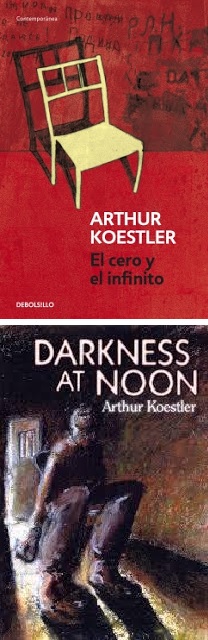
El Cero y el Infinito / Darkness at Noon

Written by Arthur Koestler on 21 February 2017. Posted in Libros recomendados / Outstanding Books.

Read the Book Review in English further below

Título original/Original title: Sonnenfinsternis
Editorial:
   Macmillan Publishers (English version)
   Contemporánea de Bolsillo (versión en español)
Fecha de 1ª Edición/Date first published: 1940
ISBN 0-553-26595-4 (English)  9788499087436 (Spanish)

El cero y el infinito (Sonnenfinsternis <Eclipse solar, en alemán>; Darkness at Noon <Oscuridad al mediodía, en inglés>) es la principal novela del autor británico de origen húngaro Arthur Koestler. Publicado originalmente en 1940, narra la historia de Rubashov, un miembro de la vieja guardia de la Revolución rusa de 1917, quien es primeramente alejado del poder, para luego acabar encarcelado y juzgado por traición al Gobierno de la Unión Soviética que él mismo había ayudado a crear.

El cero y el infinito es un intento de excelente calidad literaria por encontrar la verdad entre la confusión, la desinformación y la mentira ideológica del totalitarismo comunista. Es una introspección en los mecanismos ideológicos, administrativos y psicológicos que llevaron a la autodelación y autorecriminación de decenas de intelectuales soviéticos, algunos de ellos destacados bolcheviques, en especial en el conocido como "Juicio de los Veintiuno". En efecto, como advierte Vargas Llosa en su introducción a una de las ediciones en español de esta obra, los hechos que narra no son especialmente terribles (sobre todo si los comparamos con lo que Solyenitzin describiría en Archipiélago Gulag, por ejemplo), sino que al protagonista le someten a una tortura psicológica de luces brillantes, privación de sueño, humillaciones (métodos que todavía se utilizan en países como China, Cuba o Corea del Norte), pero lo que sobre todo interesa y sobrecoge es mostrar la retorcida lógica y la monolítica retórica que sirvió para construir una maquinaria administrativa y punitiva implacable e inhumana.

Porque el protagonista, Rubachof, es él mismo un convencido del marxismo y su aplicación a la Unión Soviética; porque él mismo ha aplicado a otros los mismos castigos (detención, tortura, expulsión del Partido, destierro, ejecución...) que ahora se le aplican a él.

Es una obra apasionante.


In the world of literature, perhaps only Aleksandr Solzhenitsyn did more to expose the lies and cruelty of 20th century totalitarianism. As a writer for Cyril Connolly’s Horizon magazine in the early 1940s, Koestler also was one of the first European journalists to alert the continent to the genocide committed by the Nazis, which earned him brickbats from such esteemed British writers as Osbert Sitwell. Koestler’s rejection of Communist principles likewise raised the public ire of such writers as George Orwell who, in short, thought the Hungarian was throwing out the proverbial socialist baby with Joe Stalin’s bathwater.

75 years after first published, Darkness at Noon continues to grab headlines. An original manuscript of the novel was discovered last year in the Zurich Central Library by a doctoral candidate. The published versions English readers know today is a hasty translation made during the early years of World War II. The original manuscript was written in German, and was thought to have been lost forever after Koestler abandoned his personal possessions while fleeing Paris in 1940 as the German army invaded. A new English translation and more in other languges are to be expected soon.

What makes Darkness at Noon such an enduring artistic work is Koestler’s firsthand knowledge of his source material. Indeed, Darkness at Noon is an imaginative effort documenting its author’s reasons for abandoning the Communist Party of which he had been a loyal adherent. Koestler explained his motives: "I was twenty-six when I joined the Communist Party, and thirty-three when I left it. The years between had been decisive years, both by the season of life which they filled, and the way they filled it with a single-minded purpose. Never before nor after had life been so brimful of meaning as during those seven years. They had the superiority of a beautiful error over a shabby truth."

Darkness at Noon is a fictionalized account of the persecution of Nikolai Bukharin, given the name Nicolas Salmanovitch Rubashov in the novel. Like Bukharin, Rubashov is a Bolshevik arrested by the regime of Josef Stalin during the Soviet Great Purges for alleged counterrevolutionary activities. Koestler brings to bear his familiarity with Stalinist dialectics learned in the Communist Party cell in which he participated during his time working as a science journalist in Germany. This knowledge lends credibility to the dialogue Rubashov conducts with his interrogators, Ivanov and Gletkin. Additionally, Rubashov’s solitary confinement is depicted in a fashion reminiscent of Koestler’s portrayal of his own harrowing internment in a Republican gaol during the Spanish Civil War, which he documented in his first memoir, Dialogue with Death (1938). 

Since the Socialist/Marxist fantasy will never become realized, encouraging young people leaning toward socialism – “soft” or otherwise – to read Koestler might bring them to the realization that all utopian goals of egalitarianism result in the substantial sacrifice of liberties they may have taken for granted. And there’s no better Koestler book to begin with than Darkness at Noon.

  • Hits: 13013
Write comment (0 Comments)

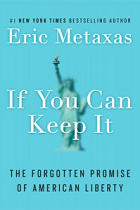
If You Can Keep It: The Forgotten Promise of American Liberty

Written by Eric Metaxas on 28 September 2016. Posted in Libros recomendados / Outstanding Books.


Viking, 2016
Barnes & Noble: 
Hardcover $17.94 


Metaxas’ golden triangle of freedom

by Sam Webb

In If You Can Keep It: The Forgotten Promise of American Liberty, author and public intellectual Eric Metaxas is concerned that the American people have forgotten the essence of our “more perfect union.” Metaxas is concerned that America today might not be worthy of future Memorial Day celebrations. He recalls in his Introduction the story of Benjamin Franklin — the story that serves as the inspiration of the name of this book — emerging from the Constitutional Convention one day when a woman asks him whether the young country is a republic or a monarchy. Franklin replied, “A republic, madam – if you can keep it.” This is the point of the book: the American experiment is exceptional and must be kept for future generations. He writes, “each of us who call ourselves Americans has a great duty to keep that promise [of America] – and if we don’t do our duty toward keeping that promise, our nation will soon cease to exist in any real sense.”

That main argument runs as a thread through the seven chapters of Metaxas’s book, which offer insight into the promise of America, a call to hold fast to the promise, while also casting a vision for a promising American future. Metaxas reminds the reader in Chapter One of the fundamental “idea of American liberty, which might also be called self-government.” This is the promise of America. In order to best keep the American promise, Metaxas prescribes that Americans “behold ourselves afresh” and perceive the strangeness of American liberty in political history.

Metaxas offers instructive insight in Chapter One when he contrasts the liberal and conservative misunderstandings of freedom. For the liberal, he writes, “American freedom is when freedom – or liberty – is confused with [moral] license.” For the conservative, however, the false hope is that an American understanding of liberty and self-government is the natural condition of mankind. Both of these are misunderstandings, Metaxas argues, because the liberal does not reckon with moral reality and the conservative understates the need for supporting structures of self-government.

Further, the inherited experiment of American liberty has “nothing to do with jingoism and nationalistic chest beating” — contra current political zeitgeist — but rather all to do with the goodness of the people called Americans. Metaxas persuasively argues that self-government – American liberty – is not only a civil government concept, but is primarily a matter of personal ethic. “True freedom must be an ‘ordered freedom’” and this ordered freedom grows from the bottom-up, a culture to a government, rather than from the top-down.

Metaxas offers a paradigm for thinking about the cultural milieu needed to sustain American liberty in Chapter Two. He borrows a concept from the Christian public intellectual Os Guiness: The Golden Triangle of Freedom, or freedom, virtue, and faith. This triad of cultural goods is mutually reinforcing. “Freedom requires virtue; virtue requires faith; faith requires freedom.”

In a secular age, the idea that freedom requires virtue and that virtue requires faith is not well-received. But, the liberal misunderstanding of freedom–freedom to moral license–disintegrates the virtuous anchor of the Golden Triangle. A lack of virtue leads to a greater need for masters. Metaxas fills the pages of this book with quotes from America’s founders making this point, a point lost on the majority of Americans today.

To poke the bear even more, Metaxas argues that virtue requires faith, or more explicitly, religion. The root of virtue in a man’s life is his religion. Metaxas writes, “[Today], everyone seems to know that helping the poor is important … or that slavery is wrong, or that being good stewards of the environment is important, but what we have completely forgotten is that these ideals all stemmed from the Judeo-Christian tradition in the West. We seem to think that whatever virtues we do possess arose by themselves. History shows this to be false.” False, indeed. Humanity is incurably religious and the religious context that spawned American liberty was specifically a Judeo-Christian context filled with its moral imperatives.

So, then, we come full triangle to freedom. Virtue and faith result in a self-governed people, a civil government constrained in its power because the people are governed by higher ideals and authority. Metaxas reminds us that faith and freedom are not bitter enemies, as thought in the 18th century France and 21st century America. Central to American freedom is religious liberty.

Religious liberty, imperiled in various ways today, was the genius of the American founding. The founders recognized the federal government should not dictate dogma, but rather facilitate freedom of faith and practice. The civil government judges behavior, not beliefs. Religious liberty has facilitated a flurry of faith communities committed to their God which serve to reinforce the virtue and freedom necessary for our thriving republic all these years. Religious liberty is the American first freedom. “We the people” must resolve to protect this freedom for the good of our collective American soul. 

  • Hits: 13495
Write comment (0 Comments)

More Articles …

  1. The Gates of Europe: A History of Ukraine
  2. On Democracy
  3. Bumerán Chávez: Los fraudes que llevaron al colapso de Venezuela
  4. Che Guevara: "Valgo más vivo que muerto"
  5. Political Order and Political Decay
  6. Dollar Trap
  7. Relativismo: ¿Relativo o Absoluto?
  8. La Corte Penal Internacional: En defensa de los Derechos Humanos

Page 21 of 36

  • 16
  • 17
  • 18
  • 19
  • 20
  • 21
  • 22
  • 23
  • 24
  • 25
Todo Fascismo es fundamentalmente desprecio. inversamente, toda forma de desprecio, si interviene en Política, prepara o instaura el Fascismo.
Albert Camus

Buscar / Search

Identificarse / Login

Identificarse / Login

  • Forgot your password?
  • Forgot your username?

Cuba: Iniciativas Democráticas

  • POR UN NUEVO COMIENZO. Documento completo.
  • CUBA, ¿Ideología o Filosofía?
  • Visiones para una Transición – Propuestas
  • Reforma Constitucional y Libertad Religiosa en Cuba
  • La transición en Cuba: Memoria Histórica, Justicia Transicional y Reconciliación Nacional. Visión y propuestas

Información Básica / Basic Information

  • European Citizen's Initiative
  • European Parliament - Political Groupings & Composition
  • ¿Qué es el Consejo de Europa? / What is the Council of Europe?

Hacer una donación
/ Donate now

  • Consulta popular en plebiscito

    [

  • Cuba: Libertad y Responsabilidad. Desafíos y Proyectos

    El autor de esta magna obra sobre la realidad cubana es Dagoberto Valdés Hernández, un Ingeniero Agrónomo de profesión, educador de vocación y dirigente católico de alma. Desde su Provincia de Pinar del Río, en Cuba, ha dirigido con firmeza y serenidad la Revista Vitral, con una notable capacidad...

  • Edificando la Democracia Participativa

    Edificando la Democracia Participativa Gerardo E. Martínez-Solanas Una de las razones fundamentales para promover la democracia participativa consiste en que tal sistema ofrece al ciudadano una capacidad de participar en decisiones orientadas a desarrollar una economía socialmente justa y...

  • Audiencia Nacional española desata crisis diplomática con China

    Dictó una orden de busca y captura contra cinco miembros de la nomenclatura china por delitos de lesa humanidad y genocidio contra el pueblo tibetano Exteriores alega que la división de poderes le impide influir en los jueces El expresidente Jiang Zemin y el exprimer ministro Li Peng (ambos en la...

  • Los malos usos de la Historia

    Una guerra dinástica, típica del Antiguo Régimen, no se puede explicar como un conflicto nacional entre España y Cataluña.Tampoco la unión de reinos bajo los Reyes Católicos fue el nacimiento de una nación Puede que alguien que no haya dedicado mucho tiempo a pensar sobre estas cosas crea que la...

Facebook
© 2003 - 2026 Participatory Democracy Cultural Initiative, Inc.
  • Noticias
    News
    • Headlines
    • Titulares
    • Cuba / Cuban Affairs
    • Venezuela / Venezuelan Affairs
    • Navegando / Browsing
  • Derechos
    H. Rights
    • Derechos Humanos / Human Rights
    • Perspectivas / Perspectives
    • Denuncias / Reports
    • Organizaciones / Campaigns
  • Economía
    Society
    • Toma nota.../Take note...
    • Economic Perspective: Doug Casey
    • Perspectiva económica: Martínez-Solanas
    • Columnistas invitados/Guest columnists
    • Mundo Sindical / A Worker's World
  • Documentos
    Data & Referenda
    • DOCUMENTOS / DOCUMENTS
    • Documentos en Español
      • Instrumentos Internacionales y Declaraciones
      • Documentos sobre Derechos Humanos
      • Cuba: Iniciativas Democráticas
      • Documentos sobre Economía
      • Doctrina Social Cristiana
      • Otros documentos y perspectivas
      • Fundamentos / Basics
    • Documents in English
      • International Instruments & Declarations
      • Human Rights Documents
      • Documents on Economy
      • Other Documents
      • Christian Social Thought
    • Libros / Outstanding Books
    • Nosotros / About us
      Enlaces / Links
  • Elecciones
    Referenda
    • Elecciones / World Elections
    • Referendos / Plebiscites' articles
  • Foro
    Debate
    • Categorías / Forum categories
    • Mensajes / Recent Topics
    • Buscar / Search in Forum