Democracia Participativa
Participatory Democracy
  • Noticias
    News
    • Headlines
    • Titulares
    • Cuba / Cuban Affairs
    • Venezuela / Venezuelan Affairs
    • Navegando / Browsing
  • Derechos
    H. Rights
    • Derechos Humanos / Human Rights
    • Perspectivas / Perspectives
    • Denuncias / Reports
    • Organizaciones / Campaigns
  • Economía
    Society
    • Toma nota.../Take note...
    • Economic Perspective: Doug Casey
    • Perspectiva económica: Martínez-Solanas
    • Columnistas invitados/Guest columnists
    • Mundo Sindical / A Worker's World
  • Documentos
    Data & Referenda
    • DOCUMENTOS / DOCUMENTS
    • Documentos en Español
      • Instrumentos Internacionales y Declaraciones
      • Documentos sobre Derechos Humanos
      • Cuba: Iniciativas Democráticas
      • Documentos sobre Economía
      • Doctrina Social Cristiana
      • Otros documentos y perspectivas
      • Fundamentos / Basics
    • Documents in English
      • International Instruments & Declarations
      • Human Rights Documents
      • Documents on Economy
      • Other Documents
      • Christian Social Thought
    • Libros / Outstanding Books
    • Nosotros / About us
      Enlaces / Links
  • Elecciones
    Referenda
    • Elecciones / World Elections
    • Referendos / Plebiscites' articles
  • Foro
    Debate
    • Categorías / Forum categories
    • Mensajes / Recent Topics
    • Buscar / Search in Forum
Democracia Participativa
Participatory Democracy
  1. Home
  2. Documentos

Libros / Outstanding Books

Catholicism & Citizenship

Written by Massimo Faggioli on 01 May 2020. Posted in Libros recomendados / Outstanding Books.


ISBN-13: 9780814684238
Publisher: Liturgical Press, The
Publication date: 04/01/2017
Pages: 192

Available in Amazon, Barnes & Noble and other bookstores.

The beginning of the twenty-first century has provided abundant evidence of the necessity to reexamine the relationship between Catholicism and the modern, global world. This book tries to proceed on this path with a focus on the meaning, legacy, and reception in today's world of the ecclesiology of Vatican II, starting with Gaudium et Spes: "This council exhorts Christians, as citizens of two cities, to strive to discharge their earthly duties conscientiously and in response to the Gospel spirit." Catholicism and Citizenship is a call for a rediscovery of the moral and political imagination of Vatican II for the Church and the world of our time.
 

In Catholicism and Citizenship, an accomplished historian of the Vatican II Church situates the novelty of Pope Francis’s orientation— and the resistance it has provoked—on the complex, changing, and disturbing terrain of global politics and ‘the crisis of the nation state.’ Francis envisions the Church as an engaged member of world society— missionary and prophetic, yet nonideological and inclusive. To those dismayed by public vitriol, worried about international politics, or doubtful that the Church can change the world, this book will bring new breadth of insight and encouraging seeds of hope.”


— Lisa Sowle Cahill
Boston College

Massimo Faggioli is in the first rank of theologians to come of age since the Second Vatican Council and to study both the Council and the post-conciliar era. In this book he sets out from Gaudium et Spes, the Council’s document on the church in the modern world, to spur Catholic ecclesiology toward a new engagement with a globalizing world in political crisis, an engagement in line with Pope Francis’s vision of 

a missionary church of mercy. Catholicism and Citizenship displays the author’s usual skill at analyzing conciliar and later documents and providing their historical context. He brings to this task a unique 

perspective and familiarity not only with Italian but European experience and theology. Sparks of insight and information fly from every chapter.”


—Peter Steinfels
Professor Emeritus Fordham University
Former co-director of the Fordham Center on Religion and Culture

With this book, Massimo Faggioli cements his reputation as his generation’s premier interpreter of the relationship between American Catholics and the Church in Rome. He is incisive, insightful, and unfailingly constructive in his observations.”

— Cathleen Kaveny
Libby Professor of Law and Theology Boston College 

  • Hits: 8209
Write comment (0 Comments)

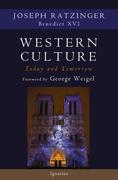
Western Culture Today and Tomorrow: Addressing the Fundamental Issues

Written by Joseph Ratzinger (Pope Emeritus Benedict XVI) on 22 November 2019. Posted in Libros recomendados / Outstanding Books.

Western Culture Today & Tomorrow

Paperback: 170 páginas
Editor: Ignatius Press (15 de octubre de 2019)
Idioma: English
ISBN-13: 978-1621643166
Disponible en:
Amazon, Barnes & Noble, Ignatius Press

Well known for his important scholarly contributions to dogmatic theology and biblical commentary, Joseph Ratzinger has also been an insightful, shrewd analyst of political modernity and its discontents. This work reveals Ratzinger's keen insight into the fundamental challenges confronting the twenty-first-century West.

The civilizational project we call "the West" was a cultural achievement with a history. Ratzinger understands that Jerusalem, Athens, and Rome were the three legs of the cultural stool on which "the West" rests. From that under- standing, Ratzinger draws his analysis of the West's post- modern crisis. Nineteenth-century Western culture kicked the Jerusalem leg out from under the stool when its "atheist humanists" declared the God of the Bible the enemy of human maturation and liberation.

When we lose the Jerusalem leg of the West's cultural support system, the Athenian leg gets wobbly. For absent the conviction that the God of the Bible imprinted something of his own "rationality" into a world created by the Logos (the Word or "reason" of God), reason begins to doubt its own ability to get at the truth of anything.

This assault on the capacity of reason to discern truth with certainty connects directly with what Ratzinger famously called the "dictatorship of relativism", the use of coercive state power to impose a relativistic moral order on all of society.

In response to this grave crisis today, Ratzinger says we need to focus on answering such fundamental questions as: How did western culture originate and what are its boundaries? What about the spiritual roots of western culture and the moral foundation she is founded on?

"The witness of Christian lives nobly lived is the beginning of reconversion of the West―and that return to the truths taught by the God of the Bible is essential if the great Western civilizational project is not to crumble. Joseph Ratzinger understood that danger long before many others. It would be well to attend to his prescription".― George Weigel, From the Foreword.

[This book also includes, as an epilogue, a new essay by Pope Emeritus Benedict XVI on clerical sex abuse, tracing the moral disorder that preys upon the young to the collapse of faith both inside and outside the Church]

  • Hits: 13600
Write comment (0 Comments)

Tomás Moro: Político y Gobernante

Written by José Gómez Cerda on 17 October 2019. Posted in Libros recomendados / Outstanding Books.

Puede adquirirse aquí:
https://academiahumanista.org/producto/tomas-moro/

US$10.00

Este libro enfoca a un personaje destacado de la historia universal, un personaje de importancia general que, sin embargo, es notablemente desconocido. Es el patrón de los políticos y los gobernantes; sin embargo, pocos conocen su grandiosa obra.

Además de ser un modelo para los abogados, los juristas, los laicos católicos, como político, presidente de la Cámara de los Comunes en Inglaterra, canciller y mártir por defender sus principios y convicciones, él escribió uno los libros políticos de mayor transcendencia en la historia: UTOPÍA.

En el caso concreto de “Utopía”, la estructura de la obra y la técnica del diálogo que emplea su autor, hacen de ella una obra que cumple a la perfección lo que se propone tratar sobre la mejor forma de una comunidad política.

Tomás Moro no busca programas de acción inmediata –tarea que corresponde a los cristianos bajo su personal responsabilidad- sino líneas maestras y principales para la edificación de una futura sociedad.

El punto de partida de Moro no es una búsqueda de lo que sería idealmente justo en el mundo, sino un método eficaz de trabajo para exponer lo que realmente tenía de malo la sociedad de esa época. Utopía es lo contrario de un Estado próspero en desarrollo económico.

Destacamos tres temas de esa obra que consideramos especialmente relevantes:

  1. La supresión del dinero,
  2. Eliminación de la propiedad privada;
  3. La dignidad y relevancia humana; El trabajo humano.

Este libro enfoca y analiza la esencia y la trascendencia de este señero personaje histórico. Clave del libro, es la visión comprensiva que Moro posee de los acontecimientos que describe y analiza. Para que todo vaya bien en la sociedad habría que acabar con la propiedad privada. El dinero es el causante de casi todos los males que acaecen en una sociedad…

¿Es el dinero la raíz última de los males?. ¿Es el dinero uno de los eslabones en el determinismo mecanicista de la historia? O, puesto de manera más positiva, ¿la eliminación del dinero en Utopía, y con ello la posibilidad de acumular bienes privados, es razón del bienestar de los utopienses?

¡No, no es ésa la razón!, sino otra bien distinta. Si los negocios humanos funcionan bien en Utopía, si la gente trabaja y cede voluntariamente el producto de su trabajo, si no existe codicia por acumular bienes ni intención de alzarse con el poder… es porque los valores espirituales priman sobre los materiales.

Si no es posible erradicar de inmediato los principios erróneos, ni abolir las costumbres inmorales, no por ello se ha de abandonar la causa pública, que es la política. El buen saber político tiene una forma y un tiempo que resulta indispensable cuidar. 

Contenido

Prólogo escrito por Ignacio Miranda

CAPITULO I. Juventud y Formación Intelectual.
CAPUTULO II. Utopía
CAPITULO III. Tomás Moro; Abogado
CAPUTULO IV. Tomás Moro y Erasmo de Rotherdam y Juan Luís Vives.
CAPITULO V. Juan Fisher;
CAPUTULO VI. Tomás Moro, HUMANISTA
CAPITULO VII. Tomás Moro frente al rey Enrique VIII.
CAPITULO VIII. Proceso penal a Tomás Moro
CAPITULO IX. La Ejecución de Tomás Moro
CAPITULO X. Últimas Cartas de Tomás Moro.
CAPITULO XI. Tomás Moro, Jurista
CAPITULO XII. Tomás Moro; Política y Gobernante.
CAPITULO XIII. Margarita Moro, Mujer culta de Inglaterra en el siglo XVI.
CAPITULO XIV. Obra de Teatro Sobre Tomás Moro.
CAPITULO XV. Los Socialistas Utópicos.
CAPITULO XVI. La Asociación Internacional Amigos de Tomás Moro.
CAPITULO XVII, Película; Un Hombre para la Eternidad.ELICULA.
CAPITULO XVIII. Santo Tomás Moro, Patrón de los Políticos y los Gobernantes.
CAPITULO XIX. Tomás Moro en la República Dominicana.
CAPITULO XX. Obras de Tomás Moro.
CAPITULO XXI Libros sobre Tomás Moro en español

  • Hits: 15545
Write comment (0 Comments)

More Articles …

  1. La irrupción de los movimientos populares. Rerum Novarum de nuestro tiempo
  2. Cuba's intervention in Venezuela: A strategic occupation with global implications
  3. Entre la Ideología y la Compasión. Guerra y Paz en Cuba.
  4. Las Ideas Políticas
  5. No es Noche ni Día
  6. La Libre Empresa
  7. El azaroso arte del engaño: Historias del mundo de la casualidad y la estadística
  8. Citizenship and Contemporaty Direct Democracy

Page 13 of 36

  • 8
  • 9
  • 10
  • 11
  • 12
  • 13
  • 14
  • 15
  • 16
  • 17
El premio y la honra mueven las cosas humanas, y en su procura los marinos navegan, los labradores aran, los monjes rezan y los soldados pelean.
Arturo Pérez-Reverte

Buscar / Search

Identificarse / Login

Identificarse / Login

  • Forgot your password?
  • Forgot your username?

Cuba: Iniciativas Democráticas

  • POR UN NUEVO COMIENZO. Documento completo.
  • CUBA, ¿Ideología o Filosofía?
  • Visiones para una Transición – Propuestas
  • Reforma Constitucional y Libertad Religiosa en Cuba
  • La transición en Cuba: Memoria Histórica, Justicia Transicional y Reconciliación Nacional. Visión y propuestas

Información Básica / Basic Information

  • European Citizen's Initiative
  • European Parliament - Political Groupings & Composition
  • ¿Qué es el Consejo de Europa? / What is the Council of Europe?

Hacer una donación
/ Donate now

  • Consulta popular en plebiscito

    [

  • Cuba: Libertad y Responsabilidad. Desafíos y Proyectos

    El autor de esta magna obra sobre la realidad cubana es Dagoberto Valdés Hernández, un Ingeniero Agrónomo de profesión, educador de vocación y dirigente católico de alma. Desde su Provincia de Pinar del Río, en Cuba, ha dirigido con firmeza y serenidad la Revista Vitral, con una notable capacidad...

  • Edificando la Democracia Participativa

    Edificando la Democracia Participativa Gerardo E. Martínez-Solanas Una de las razones fundamentales para promover la democracia participativa consiste en que tal sistema ofrece al ciudadano una capacidad de participar en decisiones orientadas a desarrollar una economía socialmente justa y...

  • Audiencia Nacional española desata crisis diplomática con China

    Dictó una orden de busca y captura contra cinco miembros de la nomenclatura china por delitos de lesa humanidad y genocidio contra el pueblo tibetano Exteriores alega que la división de poderes le impide influir en los jueces El expresidente Jiang Zemin y el exprimer ministro Li Peng (ambos en la...

  • Los malos usos de la Historia

    Una guerra dinástica, típica del Antiguo Régimen, no se puede explicar como un conflicto nacional entre España y Cataluña.Tampoco la unión de reinos bajo los Reyes Católicos fue el nacimiento de una nación Puede que alguien que no haya dedicado mucho tiempo a pensar sobre estas cosas crea que la...

Facebook
© 2003 - 2026 Participatory Democracy Cultural Initiative, Inc.
  • Noticias
    News
    • Headlines
    • Titulares
    • Cuba / Cuban Affairs
    • Venezuela / Venezuelan Affairs
    • Navegando / Browsing
  • Derechos
    H. Rights
    • Derechos Humanos / Human Rights
    • Perspectivas / Perspectives
    • Denuncias / Reports
    • Organizaciones / Campaigns
  • Economía
    Society
    • Toma nota.../Take note...
    • Economic Perspective: Doug Casey
    • Perspectiva económica: Martínez-Solanas
    • Columnistas invitados/Guest columnists
    • Mundo Sindical / A Worker's World
  • Documentos
    Data & Referenda
    • DOCUMENTOS / DOCUMENTS
    • Documentos en Español
      • Instrumentos Internacionales y Declaraciones
      • Documentos sobre Derechos Humanos
      • Cuba: Iniciativas Democráticas
      • Documentos sobre Economía
      • Doctrina Social Cristiana
      • Otros documentos y perspectivas
      • Fundamentos / Basics
    • Documents in English
      • International Instruments & Declarations
      • Human Rights Documents
      • Documents on Economy
      • Other Documents
      • Christian Social Thought
    • Libros / Outstanding Books
    • Nosotros / About us
      Enlaces / Links
  • Elecciones
    Referenda
    • Elecciones / World Elections
    • Referendos / Plebiscites' articles
  • Foro
    Debate
    • Categorías / Forum categories
    • Mensajes / Recent Topics
    • Buscar / Search in Forum