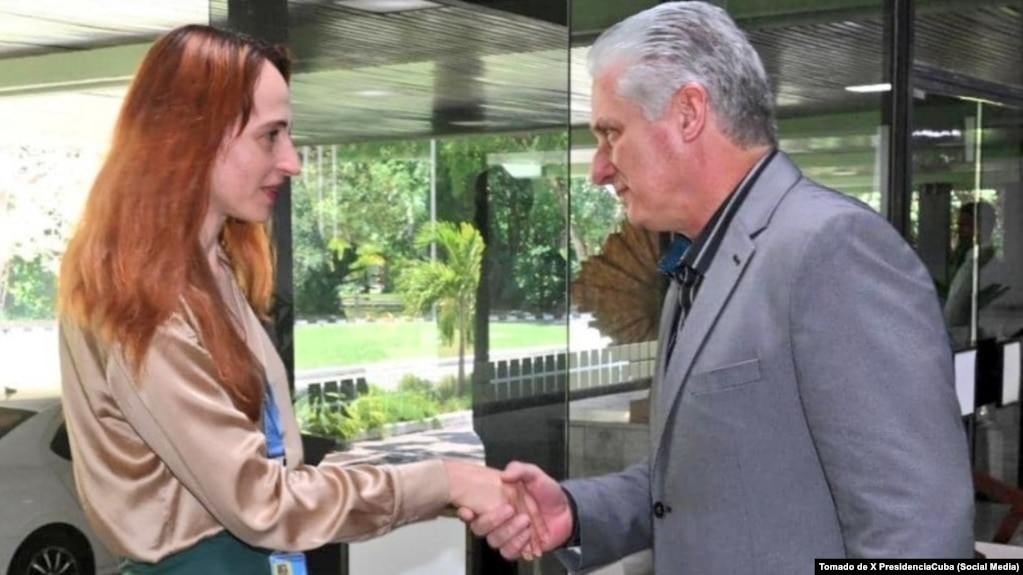
- Cases are mentioned of rapporteurs such as Alena Douhan (photo w/ Díaz Canel), George Katrougalos, Tlaleng Mofokeng and Irene Khan, accused of close links with authoritarian regimes, which would compromise their independence and objectivity.
- UN Special Rapporteur, Alena Douhan, calls for end to embargo on Cuba without addressing internal controls, political prisoners, or human rights violations, and concluded her visit to Cuba with a statement that aligns her with the official discourse on the US embargo.
United Nations, May 28 (DPnet).— A recent report from UN Watch brings to light serious concerns about the UN Human Rights Council's system of special rapporteurs, highlighting Cuba as a key example.
Titled From Watchdogs to Ideologues: How Politicized UN Rapporteurs are Subverting Human Rights, this report argues that some independent experts have adopted stances that reflect the narratives of authoritarian governments, such as those singled out by the organization.
Cuba serves as a crucial case study, demonstrating the alarming erosion of objectivity within the UN's special procedures system, particularly when evaluations appear to align with governmental interests. This undermines the integrity of the human rights agenda and calls for urgent reform.
 The UN Human Rights Council currently oversees 59 Special Procedures mandates, comprising 46 focused on global issues and 13 addressing specific countries. This significant growth of nearly 30% since the Council's inception in 2006 underlines its alleged commitment to advancing human rights worldwide. Though Special Procedures do not receive salaries, they are provided with crucial financial support for their official duties, including UN funding for country visits and access to vital training, staffing assistance, and other institutional resources. This framework empowers impartial experts to advocate for human rights and hold violators accountable.
However, the current state of the Special Procedures system sharply contrasts with the favorable assessments provided by scholars. Instead of serving as unbiased and independent experts, many mandate-holders are leveraging country visits and thematic reports to push politicized agendas. This approach not only unfairly targets democratic nations but also enables authoritarian regimes to evade much-needed scrutiny. It is crucial to realign the system's objectives with its foundational principles of impartiality and accountability.
According to the UN Watch report, «many of the experts act less as neutral investigators than as advocates advancing predetermined political narratives. This is especially the case where the mandates themselves were designed to advance a controversial agenda. Thus, the persons appointed to the post of UN Special Rapporteur on “unilateral coercive measures,” a mandate designed to delegitimize Western sanctions on dictatorships, were, first, a former Algerian diplomat, and then an employee of Belarus’s state-funded university, each committed to an explicit anti-Western agenda.»
Regarding the Cuban regime, the report questions how some rapporteurs adopt narrative frameworks that coincide with Havana's official position, particularly when describing the impact of US sanctions as central to the human rights situation.
One important reference discusses the insights of Special Rapporteur Alena Douhan on the detrimental effects of unilateral coercive measures. The UN Watch report underscores that her evaluations of the U.S. embargo against Cuba align closely with the arguments put forth by the Cuban government. Notably, it highlights the severe impact of the sanctions on the populace, while omitting a critical examination of the state’s internal responsibilities. This lack of balance raises important questions about accountability in the broader context of these measures.
“Douhan has gone to great lengths to exonerate the Cuban police state. In February 2025, he condemned the United States for reinstating Cuba as a state sponsor of terrorism, and in November 2025, he made a propaganda trip to the island. The main objective of the visit was to attack US sanctions, which he blamed for everything from food shortages to migration. In his preliminary findings, he did not criticize Cuba’s authoritarian policies,” the report states.
The report also includes Cuba in its broader analysis of political influence on the system for appointing rapporteurs. In this section, it argues that countries with questionable human rights records participate in the processes that influence the selection of experts, which, according to the organization, contributes to the system's loss of impartiality.
Comments powered by CComment