Democracia Participativa
Participatory Democracy
  • Noticias
    News
    • Headlines
    • Titulares
    • Cuba / Cuban Affairs
    • Venezuela / Venezuelan Affairs
    • Navegando / Browsing
  • Derechos
    H. Rights
    • Derechos Humanos / Human Rights
    • Perspectivas / Perspectives
    • Denuncias / Reports
    • Organizaciones / Campaigns
  • Economía
    Society
    • Toma nota.../Take note...
    • Perspectiva económica: Doug Casey
    • Perspectiva económica: Martínez-Solanas
    • Columnistas invitados/Guest columnists
    • Mundo Sindical / A Worker's World
  • Documentos
    Data & Referenda
    • DOCUMENTOS / DOCUMENTS
    • Documentos en Español
      • Instrumentos Internacionales y Declaraciones
      • Documentos sobre Derechos Humanos
      • Cuba: Iniciativas Democráticas
      • Documentos sobre Economía
      • Doctrina Social Cristiana
      • Otros documentos y perspectivas
      • Fundamentos / Basics
    • Documents in English
      • International Instruments & Declarations
      • Human Rights Documents
      • Documents on Economy
      • Other Documents
      • Christian Social Thought
    • Libros / Outstanding Books
    • Nosotros / About us
      Enlaces / Links
  • ELECCIONES
    Referenda
    • Elecciones / World Elections
    • Referendos / Plebiscites' articles
  • Foro
    Debate
    • Categorías / Forum categories
    • Mensajes / Recent Topics
    • Buscar / Search in Forum
Democracia Participativa
Participatory Democracy
  1. Home
  2. Economía
  3. Toma nota.../Take note...

Toma nota.../Take note...

¿Estado de Derecho en Cuba?

Written by Revista Convivencia on 11 December 2018. Posted in Columnistas invitados / Guest columnists.

Yoandy Izquierdo ToledoEl concepto de Estado de Derecho es bastante polémico en la actualidad, sobre todo en las regiones latinoamericanas. Si lo analizamos en detalle, y aplicamos su definición a la realidad cubana, podemos llegar fácilmente a conclusiones que demuestran la ausencia de este mecanismo democrático universal. En primera instancia el Estado de Derecho es el tipo de organización política del Estado donde la organización, desempeño y control del poder se realizan de acuerdo a la jurisprudencia. Lo más notable es la división, independencia, pero a la vez mutuo control de los tres poderes del Estado, es decir, el poder ejecutivo, legislativo y judicial. En un gobierno centralizado, como sucede en el caso cubano, las funciones de los tres poderes rectores se solapan, no existe independencia entre ellos, lo que acarrea que los mecanismos de desempeño y evaluación de las funciones fallen en múltiples ocasiones. Mucho menos puede existir autonomía de poderes cuando se coloca a una entidad como el Partido Comunista de Cuba (único partido político oficialmente existente en Cuba), por encima de la propia Asamblea Nacional, por encima de la Constitución, y se declara como “fuerza dirigente y superior de la sociedad y del Estado”.

El Estado de Derecho, como principio de gobernanza, se basa en el respeto irrestricto a los Derechos Humanos y en el cumplimiento de los deberes ciudadanos establecidos por las leyes de cada país. La violación de los derechos más elementales de vida es otro tema recurrente en el entorno latinoamericano. Solo analizar los casos de Venezuela, Cuba y Nicaragua, bastan para describir un ambiente de desamparo para los ciudadanos, quienes claman de las instituciones internacionales de derechos humanos, bloques regionales y Estados clave para la articulación de la democracia en el mundo, el concurso de sus esfuerzos y el apoyo para estos estados de transición hacia el imperio de las libertades y el orden necesario.

Read more …

  • Hits: 7371
Write comment (0 Comments)

How to resurrect Gandhi in his 150th birth Anniversary

Written by Sunita Narain ** on 04 October 2018. Posted in Columnistas invitados / Guest columnists.

 We do not have leaders who can take Gandhi's ideas and adapt and rework them for today’s world

This month would mark the beginning of the year-long celebrations for the 150th birth anniversary of Mahatma Gandhi. It is a time for reflection and I would like to take you through a Gandhi Test.

The world has surely gone downhill in terms of his most cherished ideal: non-violence. Today, we see aggression in everything; from our words to our social behaviour and our relationship with nature. Our intolerance has hit the rock bottom. We score a zero-minus on this.

Then comes the issue of development. Gandhi was not just about throwing out the British. He was about what would come next. He thought about it; wrote about it; built a distinctly different opinion about what needs to be done. His was (is) the alternative ideology to Karl Marx and Adam Smith. Here again, we are at zero, or perhaps a little above.

Gandhi lives on primarily because of the sheer force of his ideas; not because we have put them into practice. 

Read more …

  • Hits: 5629
Write comment (0 Comments)

Has Putin’s Popularity Bubble Burst?

Written by Nina L. Khrushcheva * on 16 September 2018. Posted in Columnistas invitados / Guest columnists.

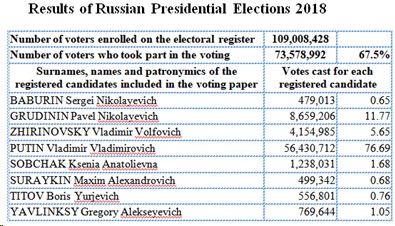
  In Russia’s presidential election in March, Vladimir Putin secured an impressive 76% of the vote – in line with a long history of broad public approval of his regime. But, with Russians becoming more worried about their futures than at any point since Putin first came to power, his popular support is slipping away.

Moscow, Sept. 14.– From controlling the media to stoking nationalism, Russian President Vladimir Putin has always known how to keep his approval ratings high. But Russians’ lives are not getting any better, especially after the latest round of Western economic sanctions – and Putin’s declining approval rating shows it.

In April, the ruble was tumbling, owing partly to the sanctions imposed in response to the Kremlin’s alleged poisoning of the former Russian double agent Sergei Skripal and his daughter on British soil. Then, in June, just as the Russia-hosted World Cup was getting underway, the government proposed increasing the retirement age from 60 to 65 for men and from 55 to 63 for women, prompting an immediate public backlash. The result was a sharp 15-point decline in the approval rating of the government overall – the largest decline of Putin’s 18-year rule.

Moreover, trust in Putin himself dipped to 48%, from about 60%. To put that in perspective, even at the beginning of Putin’s third term in 2012 – when there were mass protests over his return to the presidency after his stint as prime minister – around 60% of Russians said that they trusted him.

At that time, Putin raised his approval rating by establishing himself as Russia’s defender. When the United States, under President Barack Obama, showed itself to be unwilling to enforce its “red line” in Syria – the use of chemical weapons by President Bashar al-Assad – the Kremlin jumped in, establishing Russia as a sinister guarantor of Assad’s disarmament.

Read more …

  • Hits: 5525
Write comment (0 Comments)

Control de las armas en Estados Unidos... es fácil... no es fácil...

Written by Leo Núñez on 11 September 2018. Posted in Columnistas invitados / Guest columnists.

Resulta fácil hablar de lo que se debe hacer o no hacer con respecto al control de armas de fuego en Estados Unidos. Sin embargo, cuando se indaga acerca del tema, la cuestión resulta sumamente compleja.

Comencemos con una definición. Escuchamos mucho los términos “armas de asalto”, “rifles de asalto”, “rifles semi-automáticos”, para definir la misma cosa. Tecnicamente no existe el arma de asalto. Hay dos posibilidades. Una, el rifle de asalto, por ejemplo el M-16, un arma de guerra, militar, con selector de disparo: automatico (mientras el gatillo se mantenga oprimido, el rifle dispara bala tras bala) y semi-automático (se tiene que oprimir el gatillo cada vez que se va a hacer un disparo) La otra posibilidad, es el rifle semi-automático solamente. Los rifles automáticos no se venden al público (excepto raras excepciones con licencia federal), son armas limitadas al ejército. Los rifles semi-automáticos, de muchos calibres y modalidades, por ejemplo el AR-15, se venden libremente y son, en general, de fácil compra en los Estados Unidos. Todos tienen cargadores de alta capacidad: treinta balas. En efecto, si se dispone de $7,885.-, se puede comprar un rifle semi-automático calibre .50 (El calibre de bala que usaban para derribar los avines de combate en le Segunda Guerra Mundial!). Sin embargo, se utiliza el termino “rifle de asalto” comunmente porque el AR-15 y el AK-47 son modelos civiles exactamente iguales, excepto que solo desparan en semi-automático, a los modelos militares.


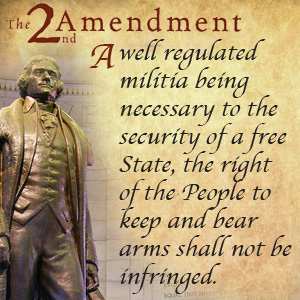
Pasemos a lo que es, el principio, el fundamento, de toda la discusión y todas las decisiones con respecto a la regulación de armas de fuego en el pais: la Segunda Enmienda de la Constitución. La Segunda Enmienda lee: “Siendo necesario una milicia bien ordenda para la seguridad de un estado libre, no se violará el derecho del pueblo de poseer y portar armas.” Fue aprobada en Diciembre del 1791 y aunque ahí esta el quid de la cuestion, la Corte Suprema, en diferentes momentos, no ha querido considerar el contexto político y geo-demográfico de la enmienda. A que nos referimos? En el Siglo XVIII, los Estados Unidos no tenía un ejército; en momentos de crisis, los ciudadanos se sumaban, con sus armas propias a la milicia y se convertían en soldados. Además, en aquella época, cuando se hablaba de poblar el Oeste de la joven nación, se referían a las regiones al Este, si, al Este, del Rio Mississippi. Era una nación con una economía casi totalmente rural, donde la caza era necesaria para suplementar la alimentación y la defensa armada de los nuevos poblados contra las tribus de indios, era indispensable.

Read more …

  • Hits: 5485
Write comment (0 Comments)

Realism and Islam

Written by James V. Schall, S.J. ** on 08 September 2018. Posted in Columnistas invitados / Guest columnists.

Our leaders cannot comprehend what is going on, either when a whole Western civilization loses its faith and moral standards or when Islam reawakens to the implications of its own faith and its vision of world conquest.

I.

Political realism, long associated with Augustine, constrains us to consider what Machiavelli later recommended to us—namely, to look at what men “do” do and not at what they “ought” to do. This advice would be more persuasive if, in fact, some men did not do what they ought to do or others do what they ought not to do. Both sides usually persuade themselves that they ought to follow their convictions. Machiavelli thought that if men did what they “ought” to do they would not survive the onslaughts and cunning of those who did what they had power to do whatever they could do. However, Augustinian realism did not, as in the case of Machiavelli, justify this careful look at what men “do” do as a reason to deny the distinction between good and evil so that any means could be used to accomplish their purposes.

The “realistic” look was “realistic” for Augustine precisely because good and evil were included in the look itself, in the reality as seen. To see and act on the reality of good or evil is to see reality in its fullest dimensions. Practical truth, in terms of acting according to an accurate description of what is there, is the first principle of realism as well as of political action. Thus, Maritain could rightly maintain in the Augustinian tradition that “justice, brains, and strength” need not be separated. They belong together. Or, to refer obliquely to Lord Acton, the lack of power can also corrupt absolutely. Not to possess and use responsible power in defense of what is right is itself an evil, a cowardice. 

With this background in mind, we recall recent events from “9/11”, the bombings in Spain, England, Mumbai, Bali, Fort Hood, San Bernardino, twice in Paris, Lahore, and Brussels, not to mention the persecutions and beheadings in Pakistan, Iraq, Yemen, Nigeria, Libya, Somalia, Chad, Syria, and the Sunni/Shiite inner-Muslim battles. What is the most plausible way to judge such continuing violence and its origins? To make this assessment, we have to acknowledge that Islam, in principle, is actually and potentially violent throughout its entire history. The basic reason for this method is obedience to the Law of Allah, not love for violence itself.

On the basis of evidence and theory, we cannot conclude from the fact that Islam is a “religion” that therefore it is not “violent” or is so only by abuse of its own founding. It is possible to be a religion and to espouse violence. (Were this not so, we would have to exclude many key passages on the Old Testament itself.) 

Read more …

  • Hits: 5079
Write comment (0 Comments)

More Articles …

  1. Venezuela y Cuba: Simbiosis totalitaria
  2. La Globalización
  3. Vietnam y Cuba: Ejemplos Contrapuestos
  4. Estatal-socialismo se derrumba y cambia por sus propias contradicciones
  5. Ensuring the impact of the Western Balkans civil society on the regional processes
  6. COLOMBIA: La Maestría Paisa
  7. Un tiro en el paladar – el desastroso "programa" de AMLO
  8. La Salud en Cuba: presente y futuro
  9. ¡Urgente! Necesitamos políticos auténticos en Colombia
  10. Raúl grita: ¡Cojan al ladrón!
  11. Post-Election Impressions from Honduras: A House Divided
  12. Historia del Cooperativismo
  13. GOSPODIN SECHIN EN AUXILIO DE TOVARICH RAÚL CASTRO
  14. ¿Somos libres para adjudicar nuestra libertad?

Subcategories

Perspectiva económica: Martínez-Solanas Article Count:  122

Perspectiva Económica: Elías Amor Article Count:  35

Perspectiva económica: Castañeda Article Count:  89

Columnistas invitados / Guest columnists Article Count:  1310

Mundo Sindical / A Worker's World Article Count:  227

Perspectiva Económica: Doug Casey Article Count:  6

Page 179 of 224

  • 174
  • 175
  • 176
  • 177
  • 178
  • 179
  • 180
  • 181
  • 182
  • 183
La paz democrática, antes que un reino de verdades, es un mundo de opiniones encontradas.
Hannah Arendt

Buscar / Search

Identificarse / Login

Identificarse / Login

  • Forgot your password?
  • Forgot your username?

Popular Economía / Most Read

  • Un Cero a la Izquierda
  • Retirarle fondos al Consejo de Derechos Humanos es un error monumental
  • ¿Premio Pulitzer a la desinformación?
  • ¿Qué es DOGE? ¿Cómo funciona? ¿Quién lo dirige?
  • Money, money, money – The US' new political approach

Documentos Economía / Random Economy Docs

  • Towards Reforming the International Financial and Monetary Systems in the context of Global Public Authority
  • Creating Good and not just Goods
  • El Indicador de Progreso Genuino y el Índice de Desarrollo Humano
  • Human Development Report 2020

Hacer una donación
/ Donate now

  • Consulta popular en plebiscito

    [

  • Cuba: Libertad y Responsabilidad. Desafíos y Proyectos

    El autor de esta magna obra sobre la realidad cubana es Dagoberto Valdés Hernández, un Ingeniero Agrónomo de profesión, educador de vocación y dirigente católico de alma. Desde su Provincia de Pinar del Río, en Cuba, ha dirigido con firmeza y serenidad la Revista Vitral, con una notable capacidad...

  • Edificando la Democracia Participativa

    Edificando la Democracia Participativa Gerardo E. Martínez-Solanas Una de las razones fundamentales para promover la democracia participativa consiste en que tal sistema ofrece al ciudadano una capacidad de participar en decisiones orientadas a desarrollar una economía socialmente justa y...

  • Audiencia Nacional española desata crisis diplomática con China

    Dictó una orden de busca y captura contra cinco miembros de la nomenclatura china por delitos de lesa humanidad y genocidio contra el pueblo tibetano Exteriores alega que la división de poderes le impide influir en los jueces El expresidente Jiang Zemin y el exprimer ministro Li Peng (ambos en la...

  • Los malos usos de la Historia

    Una guerra dinástica, típica del Antiguo Régimen, no se puede explicar como un conflicto nacional entre España y Cataluña.Tampoco la unión de reinos bajo los Reyes Católicos fue el nacimiento de una nación Puede que alguien que no haya dedicado mucho tiempo a pensar sobre estas cosas crea que la...

Facebook
© 2003 - 2025 Participatory Democracy Cultural Initiative, Inc.
  • Noticias
    News
    • Headlines
    • Titulares
    • Cuba / Cuban Affairs
    • Venezuela / Venezuelan Affairs
    • Navegando / Browsing
  • Derechos
    H. Rights
    • Derechos Humanos / Human Rights
    • Perspectivas / Perspectives
    • Denuncias / Reports
    • Organizaciones / Campaigns
  • Economía
    Society
    • Toma nota.../Take note...
    • Perspectiva económica: Doug Casey
    • Perspectiva económica: Martínez-Solanas
    • Columnistas invitados/Guest columnists
    • Mundo Sindical / A Worker's World
  • Documentos
    Data & Referenda
    • DOCUMENTOS / DOCUMENTS
    • Documentos en Español
      • Instrumentos Internacionales y Declaraciones
      • Documentos sobre Derechos Humanos
      • Cuba: Iniciativas Democráticas
      • Documentos sobre Economía
      • Doctrina Social Cristiana
      • Otros documentos y perspectivas
      • Fundamentos / Basics
    • Documents in English
      • International Instruments & Declarations
      • Human Rights Documents
      • Documents on Economy
      • Other Documents
      • Christian Social Thought
    • Libros / Outstanding Books
    • Nosotros / About us
      Enlaces / Links
  • ELECCIONES
    Referenda
    • Elecciones / World Elections
    • Referendos / Plebiscites' articles
  • Foro
    Debate
    • Categorías / Forum categories
    • Mensajes / Recent Topics
    • Buscar / Search in Forum