Democracia Participativa
Participatory Democracy
  • Noticias
    News
    • Headlines
    • Titulares
    • Cuba / Cuban Affairs
    • Venezuela / Venezuelan Affairs
    • Navegando / Browsing
  • Derechos
    H. Rights
    • Derechos Humanos / Human Rights
    • Perspectivas / Perspectives
    • Denuncias / Reports
    • Organizaciones / Campaigns
  • Economía
    Society
    • Toma nota.../Take note...
    • Economic Perspective: Doug Casey
    • Perspectiva económica: Martínez-Solanas
    • Columnistas invitados/Guest columnists
    • Mundo Sindical / A Worker's World
  • Documentos
    Data & Referenda
    • DOCUMENTOS / DOCUMENTS
    • Documentos en Español
      • Instrumentos Internacionales y Declaraciones
      • Documentos sobre Derechos Humanos
      • Cuba: Iniciativas Democráticas
      • Documentos sobre Economía
      • Doctrina Social Cristiana
      • Otros documentos y perspectivas
      • Fundamentos / Basics
    • Documents in English
      • International Instruments & Declarations
      • Human Rights Documents
      • Documents on Economy
      • Other Documents
      • Christian Social Thought
    • Libros / Outstanding Books
    • Nosotros / About us
      Enlaces / Links
  • Elecciones
    Referenda
    • Elecciones / World Elections
    • Referendos / Plebiscites' articles
  • Foro
    Debate
    • Categorías / Forum categories
    • Mensajes / Recent Topics
    • Buscar / Search in Forum
Democracia Participativa
Participatory Democracy
  1. Home
  2. Documentos

Libros / Outstanding Books

Tibet in Chains: The Stories of Nine Tibetan Nuns

Written by International Campaign for Tibet on 17 August 2021. Posted in Libros recomendados / Outstanding Books.

 
Tibet in Chains: The Stories of Nine Tibetan Nuns

Compiled by the International Campaign for Tibet

Amazon: Kindle
Barnes & Noble: Nook
US$0.99 to download

In the early 1990s, the notorious prisons in the Tibetan capital of Lhasa held hundreds of political prisoners who protested against China’s misrule in Tibet. Among them were a group of 14 nuns, mostly from Garu nunnery near Lhasa, who were imprisoned in the dreaded Drapchi Prison. On account of their comradeship and solidarity, including in recording a song in praise of His Holiness the Dalai Lama and Tibet, they came to be known as the Drapchi 14. This book tells the story of nine of those nuns and provides a better understanding of the role played by Tibetan nuns in the Tibetan freedom movement.

In this book, each nun shares her own story in her own words, describing her family, early life in Tibet, dedication to Tibetan Buddhism and His Holiness the Dalai Lama, torture faced in prison and drawing strength from her fellow nuns. They describe beatings with bamboo sticks, torture with electric cattle prods, and a long list of shocking, inhumane conditions. But the nuns continued to resist. They secretly recorded songs calling for Tibet's independence and praising their spiritual leader, the Dalai Lama. Their sentences were extended as a result. That is why they are known as "the singing nuns".

Through their personal stories, we are able to have a sense of their life in Tibet, of their motivation to speak up against oppression —despite the certainty that they would be severely punished— and of the importance of Tibetan religion, culture and identity, and why the world should not forsake the Tibetan people. “I will always remember my former prison mates who suffer ill health. I always support and participate in movements for the cause of Tibet and the Tibetan people. In the beginning, I had little knowledge of the history of Tibet but knew clearly that China and Tibet were separate ... Because the cause of Tibet is deeply embedded in our hearts, and until this long-felt aspiration is fulfilled, my spirit will never die.” – Sonam Choedon, one of the nuns featured in the book.

  • Tibet
  • Dalai Lama
  • nuns
  • oppression
  • Hits: 5689
Write comment (0 Comments)

The Middle East Riddle

Written by Luis Fleischman on 12 April 2021. Posted in Libros recomendados / Outstanding Books.

A Study of the Middle East Peace Process
and Israeli-Arab Relations in Changing Times


Author: Luis Fleischman
New Academia Publishing, 2021
264 Pages
ISBN 978-1-7333980-8-4 paperback


This book provides an essential analysis to understand the many mistakes and some successes marking the historical reality of the various attempts to forge a lasting peace between Israelis and Palestinians; it shows as well how the process has been torpedoed by the aggressive intransigence of Hamas and Fatah and by the evident inability of the Palestinian Authority to exercise a moderating influence in order to reach viable agreements with the Israeli government.

Although the author shows obvious sympathy for the Israeli side, he also shows remarkable objectivity to blame and criticize both parties involved in the Oslo peace process and in subsequent efforts, all of which have led to one impasse after another.

Given these circumstances, Dr. Fleischman observes that "a solution to the current Israeli-Palestinian conflict must come from some regional arrangement that includes the Arab World", although he also acknowledges that: "Historically, Arab states opposed the creation of the State of Israel because they saw it as a non-Arab, non-Muslim entity in the heart of the Middle East". Furthermore, he analyzes the advantages and disadvantages of an Israeli unilateral withdrawal from most of the West Bank, as well as President Trump's plan, which seemed so well on track until the Summer of 2020, painstakingly structured as a very detailed "political proposal that differs from previous atempts to resolve the Israeli-Palestinian conflict" – a peace plan counting with the endorsement of some important Arab States or, at least, arousing the interest of many others.

Looking at the other side of the coin, the book recognizes the role of the international community as complicit in perpetuating the conflict through the actions of the United Nations and some Western countries.

In general, Dr. Fleischman abounds in the history of the peace process, showing that the sides have been very close to an agreement, and searches for nuanced solutions towards progress. He explores the chances that the Palestinian security establishment, that has worked together with the Israeli security establishment for years, could generate the leadership necessary to restore order to Palestinian society.

Indeed, this is an impressive book addressing important aspects of the Israeli-Palestinian conflict from a socio-political perspective. It opens the doors to a measured and productive public debate on the subject.

  • Hits: 6963
Write comment (0 Comments)

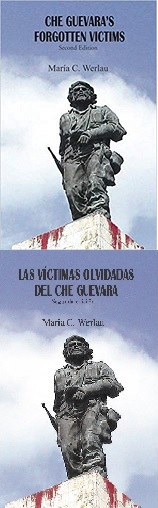
Che Guevara's Forgotten Victims / Las Víctimas olvidadas del Ché Guevara

Written by María C. Werlau on 23 March 2021. Posted in Libros recomendados / Outstanding Books.

Lea la reseña del libro en español a continuación del texto en inglés.

Alexandria Library, 2011
Neo Club Ediciones, 2nd Edition, 2020
54 pp
Also available in Kindle format.

Published in English and also in Spanish [También publicado en español]

This strictly and abundantly documented book is an indispensable work to unmask the myth woven around the much revered Commander of the Castro's Revolution, known as Che Guevara. Available at a very affordable price in Amazon.

The pervasiveness and worldwide reach of a romanticized view of Che Guevara is a unique phenomenon of modern history that lacks grounding in critical facts. Having addressed many informational requests on Che Guevara from scholars, researchers, journalists, etc., in 2011 Cuba Archive decided to contribute to a bibliography woefully lacking on his victims with this compendium. It contained until then unpublished information including names, photographs, and stories of Guevara’s victims. This second edition, 54 pages long and available in both English and Spanish, contains updated lists of victims, new information, and the previously unrecorded testimony of the summary killing of two brothers from Vertientes, Camaguey, on Guevara’s orders alleged of being snitches.

Following are brief excerpts from the book:

"Cuba’s Communist regime has committed egregious human rights violations for over six decades. Yet, it has been generally treated by the international community much more favorably than other dictatorships. This, in large part stems from a false legitimacy derived from its propaganda campaigns; they are among the most successful of all times.
(…)
Ion Mihai Pacepa, who defected to the West in 1978 when he was the head of Rumania’s intelligence services Securitate, confirms that Cuba’s intelligence service and propaganda machine mounted a campaign to plaster a romantic revolutionary façade over Cuban communism by making Che Guevara its poster boy. The Castro brothers, he claims, decided that because Che had been executed in Bolivia in 1968, he could be portrayed as a martyr of American imperialism. According to Pacepa, the KGB immediately supported the idea and Soviet satellite services, including Rumania’s, were ordered to lend a hand to “Operation Che.” Pacepa explains that the iconic picture of Che Guevara taken by the Cuban photographer Korda (Alberto Díaz Gutiérrez) was introduced to the world by a KGB operative working undercover as a writer, I. Lavresky, in a book entitled Ernesto Che Guevara, edited by the KGB (Moscow: Progress Publishers, 1976). The KGB then disseminated Che’s photograph throughout South America and used the Italian communist Giangiacomo Feltrenelli, a millionaire publisher involved with the KGB, to flood the rest of the world with the photo in posters and t-shirts.”

Che Guevara’s image, of course, has for decades enriched endless capitalist enterprises producing T-shirts, assorted paraphernalia and Hollywood movies.

------------------

Este libro estricta y abundantemente documentado es una obra indispensable para desenmascarar el mito tejido alrededor del tan reverenciado Comandante de la Revolución Castrista, conocido como Che Guevara.

La difusión y el alcance mundial de la visión romántica del Che Guevara es un fenómeno único de la historia moderna sin fundamento en verdades esenciales. Habiendo recibido muchas solicitudes de información sobre el Che Guevara por parte de académicos, investigadores, periodistas, etc., Archivo Cuba publicó este compendio en 2011 para contribuir a la bibliografía de Guevara, que es casi nula con respecto a sus víctimas. Aportó información inédita incluyendo nombres, fotografías e historias de sus víctimas. Esta segunda edición, de 56 páginas y disponible en español e inglés, contiene listas actualizadas de víctimas, nueva información y un testimonio inédito sobre la ejecución sumaria por orden de Guevara de dos hermanos de Vertientes, Camagüey, acusados de ser “chivatos.”

A continuación, lea algunos trozos del libro:

“El régimen comunista cubano ha cometido graves violaciones de los derechos humanos durante más de seis décadas. La comunidad internacional le ha dado un trato mucho más favorable que a otras dictaduras en gran parte por la falsa legitimidad que deriva de sus campañas propagandísticas. Estas probablemente son de las más exitosas de todos los tiempos y ayudan a ocultar sus peores crímenes y cultivar la idolatría de sus líderes.
(…)
Ion Mihai Pacepa, quien desertó a Occidente en 1978 siendo el jefe de los servicios de inteligencia de Rumania Securitate, ha escrito que el servicio de inteligencia y la maquinaria de propaganda de Cuba prepararon la campaña en torno al Che Guevara para darle una fachada revolucionaria romántica al comunismo cubano. Afirma que los hermanos Castro decidieron que el Che podía ser representado como un mártir del imperialismo estadounidense por haber sido ejecutado en Bolivia en 1968. Según Pacepa, la KGB inmediatamente apoyó la idea y se ordenó a los servicios de inteligencia de los satélites soviéticos, incluido el de Rumania, que echaran una mano a la “Operación Che.” Pacepa explica que la icónica imagen del Che Guevara tomada por el fotógrafo cubano Korda (Alberto Díaz Gutiérrez) fue presentada al mundo por un operativo encubierto de la KGB, el escritor I. Lavresky, en un libro titulado Ernesto Che Guevara, editado por la KGB (Moscú: Progress Publishers, 1976). Luego, la KGB difundió la fotografía de Korda por toda Sudamérica y usó al comunista italiano Giangiacomo Feltrenelli, un editor millonario involucrado con la KGB, para inundar el mundo con la foto en carteles y camisetas.”

La imagen del Che ha enriquecido a un sinfín de empresas capitalistas de camisetas y todo tipo de parafernalia.  

  • Hits: 8270
Write comment (0 Comments)

More Articles …

  1. La Sociedad Homosexual y otros ensayos
  2. El soviet caribeño: La otra historia de la revolución cubana
  3. How the Specter of Communism is ruling our World
  4. Return to Order – Where we've been, how we got here, and where we need to go
  5. La Masonería y la Revolución Intelectual del Siglo XVIII
  6. El Hombre que amaba a los Perros
  7. Catholicism & Citizenship
  8. Western Culture Today and Tomorrow: Addressing the Fundamental Issues

Page 10 of 36

  • 5
  • 6
  • 7
  • 8
  • 9
  • 10
  • 11
  • 12
  • 13
  • 14
La paz democrática, antes que un reino de verdades, es un mundo de opiniones encontradas.
Hannah Arendt

Buscar / Search

Identificarse / Login

Identificarse / Login

  • Forgot your password?
  • Forgot your username?

Cuba: Iniciativas Democráticas

  • POR UN NUEVO COMIENZO. Documento completo.
  • CUBA, ¿Ideología o Filosofía?
  • Visiones para una Transición – Propuestas
  • Reforma Constitucional y Libertad Religiosa en Cuba
  • La transición en Cuba: Memoria Histórica, Justicia Transicional y Reconciliación Nacional. Visión y propuestas

Información Básica / Basic Information

  • European Citizen's Initiative
  • European Parliament - Political Groupings & Composition
  • ¿Qué es el Consejo de Europa? / What is the Council of Europe?

Hacer una donación
/ Donate now

  • Consulta popular en plebiscito

    [

  • Cuba: Libertad y Responsabilidad. Desafíos y Proyectos

    El autor de esta magna obra sobre la realidad cubana es Dagoberto Valdés Hernández, un Ingeniero Agrónomo de profesión, educador de vocación y dirigente católico de alma. Desde su Provincia de Pinar del Río, en Cuba, ha dirigido con firmeza y serenidad la Revista Vitral, con una notable capacidad...

  • Edificando la Democracia Participativa

    Edificando la Democracia Participativa Gerardo E. Martínez-Solanas Una de las razones fundamentales para promover la democracia participativa consiste en que tal sistema ofrece al ciudadano una capacidad de participar en decisiones orientadas a desarrollar una economía socialmente justa y...

  • Audiencia Nacional española desata crisis diplomática con China

    Dictó una orden de busca y captura contra cinco miembros de la nomenclatura china por delitos de lesa humanidad y genocidio contra el pueblo tibetano Exteriores alega que la división de poderes le impide influir en los jueces El expresidente Jiang Zemin y el exprimer ministro Li Peng (ambos en la...

  • Los malos usos de la Historia

    Una guerra dinástica, típica del Antiguo Régimen, no se puede explicar como un conflicto nacional entre España y Cataluña.Tampoco la unión de reinos bajo los Reyes Católicos fue el nacimiento de una nación Puede que alguien que no haya dedicado mucho tiempo a pensar sobre estas cosas crea que la...

Facebook
© 2003 - 2026 Participatory Democracy Cultural Initiative, Inc.
  • Noticias
    News
    • Headlines
    • Titulares
    • Cuba / Cuban Affairs
    • Venezuela / Venezuelan Affairs
    • Navegando / Browsing
  • Derechos
    H. Rights
    • Derechos Humanos / Human Rights
    • Perspectivas / Perspectives
    • Denuncias / Reports
    • Organizaciones / Campaigns
  • Economía
    Society
    • Toma nota.../Take note...
    • Economic Perspective: Doug Casey
    • Perspectiva económica: Martínez-Solanas
    • Columnistas invitados/Guest columnists
    • Mundo Sindical / A Worker's World
  • Documentos
    Data & Referenda
    • DOCUMENTOS / DOCUMENTS
    • Documentos en Español
      • Instrumentos Internacionales y Declaraciones
      • Documentos sobre Derechos Humanos
      • Cuba: Iniciativas Democráticas
      • Documentos sobre Economía
      • Doctrina Social Cristiana
      • Otros documentos y perspectivas
      • Fundamentos / Basics
    • Documents in English
      • International Instruments & Declarations
      • Human Rights Documents
      • Documents on Economy
      • Other Documents
      • Christian Social Thought
    • Libros / Outstanding Books
    • Nosotros / About us
      Enlaces / Links
  • Elecciones
    Referenda
    • Elecciones / World Elections
    • Referendos / Plebiscites' articles
  • Foro
    Debate
    • Categorías / Forum categories
    • Mensajes / Recent Topics
    • Buscar / Search in Forum