Democracia Participativa
Participatory Democracy
  • Noticias
    News
    • Headlines
    • Titulares
    • Cuba / Cuban Affairs
    • Venezuela / Venezuelan Affairs
    • Navegando / Browsing
  • Derechos
    H. Rights
    • Derechos Humanos / Human Rights
    • Perspectivas / Perspectives
    • Denuncias / Reports
    • Organizaciones / Campaigns
  • Economía
    Society
    • Toma nota.../Take note...
    • Perspectiva económica: Doug Casey
    • Perspectiva económica: Martínez-Solanas
    • Columnistas invitados/Guest columnists
    • Mundo Sindical / A Worker's World
  • Documentos
    Data & Referenda
    • DOCUMENTOS / DOCUMENTS
    • Documentos en Español
      • Instrumentos Internacionales y Declaraciones
      • Documentos sobre Derechos Humanos
      • Cuba: Iniciativas Democráticas
      • Documentos sobre Economía
      • Doctrina Social Cristiana
      • Otros documentos y perspectivas
      • Fundamentos / Basics
    • Documents in English
      • International Instruments & Declarations
      • Human Rights Documents
      • Documents on Economy
      • Other Documents
      • Christian Social Thought
    • Libros / Outstanding Books
    • Nosotros / About us
      Enlaces / Links
  • ELECCIONES
    Referenda
    • Elecciones / World Elections
    • Referendos / Plebiscites' articles
  • Foro
    Debate
    • Categorías / Forum categories
    • Mensajes / Recent Topics
    • Buscar / Search in Forum
Democracia Participativa
Participatory Democracy
  1. Home
  2. Documentos
  3. Libros / Outstanding Books

Libros / Outstanding Books

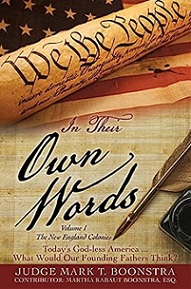
In their Own Words

Written by Judge Mark Boonstra on 05 June 2023. Posted in Libros recomendados / Outstanding Books.

In Their own Words


3 Vols.
Liberty Hill Press
Maitland, FL 32751
Paperback ISBN-13:978-1-6628-6246-5
Ebook ISBN-13: 978-1-6628-6248-9


The three volumes of this excellent research and analysis effort exhibit exceptional clarity in their exposition. This is thus an easy-to-read, deeply informative work.

In "In Their Own Words", Judge Mark Boonstra* shows readers what their gut instinctively is telling them. He reveals not only who our Founding Fathers were, and what they believed, but he brings them to light in their own words. And he then contrasts what our Founding Fathers said with real-world examples of what is happening today in America. So, don't take his word for it. Take the words of America's Founding Fathers themselves. And then ask yourself: What Would these Founding Fathers think of today's God-less America?

In the review published by Dustin Bass last May, he rightly points out that: «Boonstra diligently spent eight years working on his “In Their Own Words” multi-volume project, which presents the beliefs and ideas from all 118 signers of America’s three foundational documents: the Declaration of Independence, the Articles of Confederation, and the Constitution. His adherence to the letter of the law and his disdain for judicial activism has drawn the ire of the left. His appreciation for textualism, commonly referred to as constitutional originalism, has led him to place his needle within the social fabric of American society in hopes of sewing back some of its tears.»

Further down in his review, Bass remarks that «he believes that religion has been completely undermined in the United States, even to the point that it’s held in contempt by much of the general public, along with local, state, and federal governments. A notion that has driven this narrative is what he believes to be a misinterpretation of the establishment clause in the First Amendment, commonly referred to as the “separation of church and state” clause.

Boonstra noted that the establishment clause was absolutely necessary when the founders began forming the republic. Colonists had come to the New World to escape religious tyranny via an established church.»

Furthermore, «since the phrase “separation of church and state” isn’t in the Constitution but is rather a reference to the spirit of the law in a letter from Thomas Jefferson responding to ministers of the Danbury Baptist Association, it apparently has allowed for some people, from politicians to political commentators to professors to the average citizen, to misconstrue the spirit of that law.

“Today we say ‘separation of church and state’ and we make it appear antagonistic, but it wasn’t at all,” Boonstra said. “When Jefferson wrote that, it was because Baptists had been persecuted in certain colonies, including his colony of Virginia, and they wanted assurance that they would be able to practice as they wished.»

But this 3-volume work is NOT about religion, rather it offers us a vast panorama of the thought of the founding fathers of the North American homeland and how they laid the foundations of a nation that would become great and powerful thanks to that remarkable foresight.

It is without a doubt a remarkable gift of democratic thought.

* Judge Boonstra practiced private law for nearly three decades and he has sat on Michigan’s 3rd District Court of Appeals for the past decade up to the present day.

  • United States
  • reform
  • First Amendment
  • freedom of religion
  • founders
  • morality
  • founding fathers
  • Hits: 2175
Write comment (0 Comments)

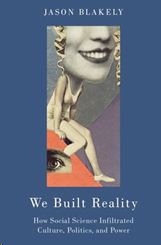
We Built Reality: How Social Science Infiltrated Culture, Politics, and Power

Written by Jason Blakely on 06 April 2023. Posted in Libros recomendados / Outstanding Books.

 We Built Reality

Oxford University Press, 2020
184 páginas
ISBN-10: 0190087382
ISBN-13: 978-0190087388


Over the last fifty years, pseudoscience has crept into nearly every facet of our lives. Popular sciences of everything from dating and economics to voting and artificial intelligence, radically changed the world today. The abuse of popular scientific authority has catastrophic consequences, contributing to the 2008 financial crisis; the failure to predict the rise of Donald Trump; increased tensions between poor communities and the police; and the sidelining of nonscientific forms of knowledge and wisdom.

In We Built Reality, Jason Blakely explains how recent social science theories have not simply described political realities but also helped create them. But he also offers readers a way out of the culture of scientism: hermeneutics or the art of interpretation. Hermeneutics urges sensitivity to the historical and cultural contexts of human behavior. It gives ordinary people a way to appreciate the insights of the humanities in guiding decisions. As Blakely contends, we need insights from the humanities to see how social science theories never simply neutrally describe reality, they also help build it.

Jason Blakely is a professor of political science at Pepperdine University and has written extensively on political philosophy, political theology, and the social sciences. He has written this book on the many ways in which social scientific methodologies, while purporting to describe in a neutral manner individuals and societies, in fact, generate new conceptions of their subjects that then feed into a "double-hermeneutical" (double-H) loop: Social scientists imagine the world through various presuppositions and then analyze and contextualize data in ways that can only reinforce their original theories.

At his best, Blakely gives readers the tools to interrogate the methods of social scientists who, intentionally or not, have smuggled serious philosophical claims into their work under the guises of "objectivity," "neutrality," and, yes, even "science." However, readers of a more conservative bent will inevitably notice Blakely's bias in favor of his own left-communitarianism. Still, We Built Reality is worth considering for its illumination of the ways in which so much ground-breaking social science ultimately leads not to a broader understanding but a narrower reimagining of humanity.

All told, We Built Reality is a concise introduction to interpretive (hermeneutical) philosophy that will open the eyes of readers to the unstated but highly debatable presuppositions so much of the social science that populates our imagination rests upon

  • economics
  • political science
  • social sciences
  • sociology
  • objectivity
  • Hits: 2580
Write comment (0 Comments)

La Huella del Cristianismo en la Historia – Luces y Sombras de su notable acontecer

Written by Gerardo E. Martínez-Solanas on 31 December 2022. Posted in Libros recomendados / Outstanding Books.

La Huella del Cristianismo en la Historia
ASIN ‏ : ‎ B0BLR6W5NS
Publisher ‏ : ‎ Ediciones Nueva Atlántida
Date of publication: December 19, 2022
Language ‏ : ‎ Spanish
Paperback ‏ : ‎ 384 pages
ISBN-13 ‏ : ‎ 979-8362639556


Disponible en Amazon por $16.95
Disponible con un donativo deducible de los impuestos en EEUU mediante cheque por US$19 (incluyendo franqueo), pagadero a Democracia Participativa.net, 2150 SW 123rd Ave., Miami, FL 33175.

Esta es una obra reveladora y abarcadora que transita por la Historia de 20 siglos, donde el Cristianismo y su enorme trascendencia dejan una profunda huella con su notable acontecer de Luces y Sombras. Sus páginas transitan hasta las raíces de una fe y está basado en hechos documentados y comprobables que han transformado gradualmente la sociedad hasta desembocar en el mundo globalizado de hoy. Despliega a los ojos del lector un apasionante panorama que evoluciona a lo largo de dos milenios, dejando a cada paso una huella trascendente que acaba trasformando la llamada "civilización occidental" en una auténtica "civilización universal". El texto es de fácil lectura, como una dinámica novela poblada por miles de personajes importantes.

•. ¿Cuál es la dinámica doctrinal que cambió el destino de la humanidad?
•. ¿Cuáles son las bases históricas del Nuevo Testamento?
•. ¿Qué son los Evangelios Apócrifos?
•. ¿Cuál fue el verdadero papel de Constantino y Teodosio en la Historia del Cristianismo?
•. ¿Cuál fue el origen de la diplomacia moderna?
•. ¿Cómo se desarrollaron las misiones y cuál ha sido su influencia?
•. ¿Qué provocó los cismas de Oriente y de Occidente?
•. ¿Qué motivó las Cruzadas y qué causó su fin?
•. ¿Cuál es la verdad histórica de la Inquisición?
•. ¿Quiénes fueron los Templarios?
•. ¿Quiénes fueron los cátaros o albigenses?
•. ¿Por qué Lutero, Calvino y otros cristianos provocaron la "Reforma Protestante" y qué fue la "Contrarreforma"?
•. ¿Qué es lo que no se dice de “la Ilustración”?
•. ¿Cuál fue el origen de la ciencia económica y del derecho de gentes?
•. ¿Cómo se desarrolló la civilización moderna sobre las bases judeocristianas?
•. ¿Cómo se enfrentaron las Iglesias al totalitarismo?
•. ¿Qué plantea la Doctrina Social de la Iglesia?
•. ¿Por qué renunció SS Benedicto XVI? . Antecedentes.

El lector encontrará en esta obra la respuesta a estas y muchas otras dudas sobre la influencia decisiva del Cristianismo en la Historia y la profunda huella que ha dejado en la civilización moderna. Es también una verdadera obra de referencia que cuenta con un extenso índice onomástico y temático, un vocabulario y otros instrumentos informativos que figuran como Anexos.

Comentarios de algunos primeros lectores:

"Se trata de la visión de un laico, cuya espiritualidad abraza las premisas del cristianismo con una apertura universal. Muy pocos estudiosos, han intentando tal empeño. Constituye un recuento del devenir del cristianismo que analiza los factores políticos, económicos, sociales y teológicos que matizan la realidad actual. Recorrer este libro, es entrar en la concatenación del cristianismo como base de la sociedad occidental, su proyección a nivel planetario para establecer sus nexos, en ocasiones azarosos, con las diversas confesiones que a la luz de la Iglesia Católica surgieron."

Dr. Nelson Amaro, Sociólogo y ex Funcionario de Naciones Unidas

"Me adentré despreocupadamente en la lectura de este libro, con curiosidad no exenta de cierto asombro desde la primera línea. Encontré una obra erudita, sumamente compleja y muy oportuna para los iniciados en la llamada tradición histórica. La idea de dividir el gran escenario en tres milenios y éstos enfocados respectivamente en varias grandes ideas (capítulos), da la pauta para interpretar la ruta del autor y nuestra búsqueda. Agradeceremos siempre este libro tan necesario en nuestro entorno y más allá."

 Dr. Santiago Cárdenas, MD

"Recorrí este libro con una mirada global interesada. Es una obra valiosa en el que el autor se coloca en la perspectiva del autor. Está bien ordenado y presentado, escrito con estilo claro, ameno y lógico. Es honesto y reconoce las luces y las sombras, llegando hasta los últimos escándalos. No se queda en las grandes figuras de papas y reyes sino que da cabida a muchos pensadores. También trata temas de interés local, como los irlandeses peleando con los Cristerons en México y qué hicieron los protestantes. La bibliografía es sólida y útil. La explicación de los términos al final y la lista de Papas ayudan al lector."

Rev. P. Manuel P. Maza Miguel, S.J., Historiador y Teólogo

"¡Muchas felicidades! Gran labor; ¡que Dios te bendiga por tanto esfuerzo y desvelo! La historia de la gracia, de la salvación, es siempre causa de asombro."

Bishop Emeritus Felipe J. Estévez, Archdiceses of St. Augustin

  • totalitarismo
  • Historia
  • reforma
  • Cristianismo
  • Cruzadas
  • inquisición
  • Hits: 5802
Write comment (0 Comments)

More Articles …

  1. Dismantling America: and other controversial essays
  2. Slouching Towards Utopia
  3. La Vuelta del Comunismo
  4. El Ocaso de la Democracia: la seducción del autoritarismo
  5. Complementary Democracy – The Art of Deliberative Listening
  6. When the Iron Bird Flies
  7. Democracia y Sistema de Mercado
  8. The Lost Mandate of Heaven: The American Betrayal of Ngo Dinh Diem

Page 5 of 36

  • 1
  • 2
  • 3
  • 4
  • 5
  • 6
  • 7
  • 8
  • 9
  • 10
La discordia es el mal mayor del género humano y la tolerancia es el único remedio
François-Marie AROUET (Voltaire)

Buscar / Search

Identificarse / Login

Identificarse / Login

  • Forgot your password?
  • Forgot your username?

Cuba: Iniciativas Democráticas

  • CUBA, ¿Ideología o Filosofía?
  • Visiones para una Transición – Propuestas
  • Reforma Constitucional y Libertad Religiosa en Cuba
  • La transición en Cuba: Memoria Histórica, Justicia Transicional y Reconciliación Nacional. Visión y propuestas
  • MANIFIESTO DE JUSTICIA SOCIAL PARA LA CUBA DEL FUTURO

Información Básica / Basic Information

  • European Citizen's Initiative
  • European Parliament - Political Groupings & Composition
  • ¿Qué es el Consejo de Europa? / What is the Council of Europe?

Hacer una donación
/ Donate now

  • Consulta popular en plebiscito

    [

  • Cuba: Libertad y Responsabilidad. Desafíos y Proyectos

    El autor de esta magna obra sobre la realidad cubana es Dagoberto Valdés Hernández, un Ingeniero Agrónomo de profesión, educador de vocación y dirigente católico de alma. Desde su Provincia de Pinar del Río, en Cuba, ha dirigido con firmeza y serenidad la Revista Vitral, con una notable capacidad...

  • Edificando la Democracia Participativa

    Edificando la Democracia Participativa Gerardo E. Martínez-Solanas Una de las razones fundamentales para promover la democracia participativa consiste en que tal sistema ofrece al ciudadano una capacidad de participar en decisiones orientadas a desarrollar una economía socialmente justa y...

  • Audiencia Nacional española desata crisis diplomática con China

    Dictó una orden de busca y captura contra cinco miembros de la nomenclatura china por delitos de lesa humanidad y genocidio contra el pueblo tibetano Exteriores alega que la división de poderes le impide influir en los jueces El expresidente Jiang Zemin y el exprimer ministro Li Peng (ambos en la...

  • Los malos usos de la Historia

    Una guerra dinástica, típica del Antiguo Régimen, no se puede explicar como un conflicto nacional entre España y Cataluña.Tampoco la unión de reinos bajo los Reyes Católicos fue el nacimiento de una nación Puede que alguien que no haya dedicado mucho tiempo a pensar sobre estas cosas crea que la...

Facebook
© 2003 - 2025 Participatory Democracy Cultural Initiative, Inc.
  • Noticias
    News
    • Headlines
    • Titulares
    • Cuba / Cuban Affairs
    • Venezuela / Venezuelan Affairs
    • Navegando / Browsing
  • Derechos
    H. Rights
    • Derechos Humanos / Human Rights
    • Perspectivas / Perspectives
    • Denuncias / Reports
    • Organizaciones / Campaigns
  • Economía
    Society
    • Toma nota.../Take note...
    • Perspectiva económica: Doug Casey
    • Perspectiva económica: Martínez-Solanas
    • Columnistas invitados/Guest columnists
    • Mundo Sindical / A Worker's World
  • Documentos
    Data & Referenda
    • DOCUMENTOS / DOCUMENTS
    • Documentos en Español
      • Instrumentos Internacionales y Declaraciones
      • Documentos sobre Derechos Humanos
      • Cuba: Iniciativas Democráticas
      • Documentos sobre Economía
      • Doctrina Social Cristiana
      • Otros documentos y perspectivas
      • Fundamentos / Basics
    • Documents in English
      • International Instruments & Declarations
      • Human Rights Documents
      • Documents on Economy
      • Other Documents
      • Christian Social Thought
    • Libros / Outstanding Books
    • Nosotros / About us
      Enlaces / Links
  • ELECCIONES
    Referenda
    • Elecciones / World Elections
    • Referendos / Plebiscites' articles
  • Foro
    Debate
    • Categorías / Forum categories
    • Mensajes / Recent Topics
    • Buscar / Search in Forum